Professional Hair Bleaching: Step-by-Step
Learn to bleach hair professionally. Lifting stages, timing, products and techniques for flawless results without compromising hair health.
Blendsor
Blendsor Team
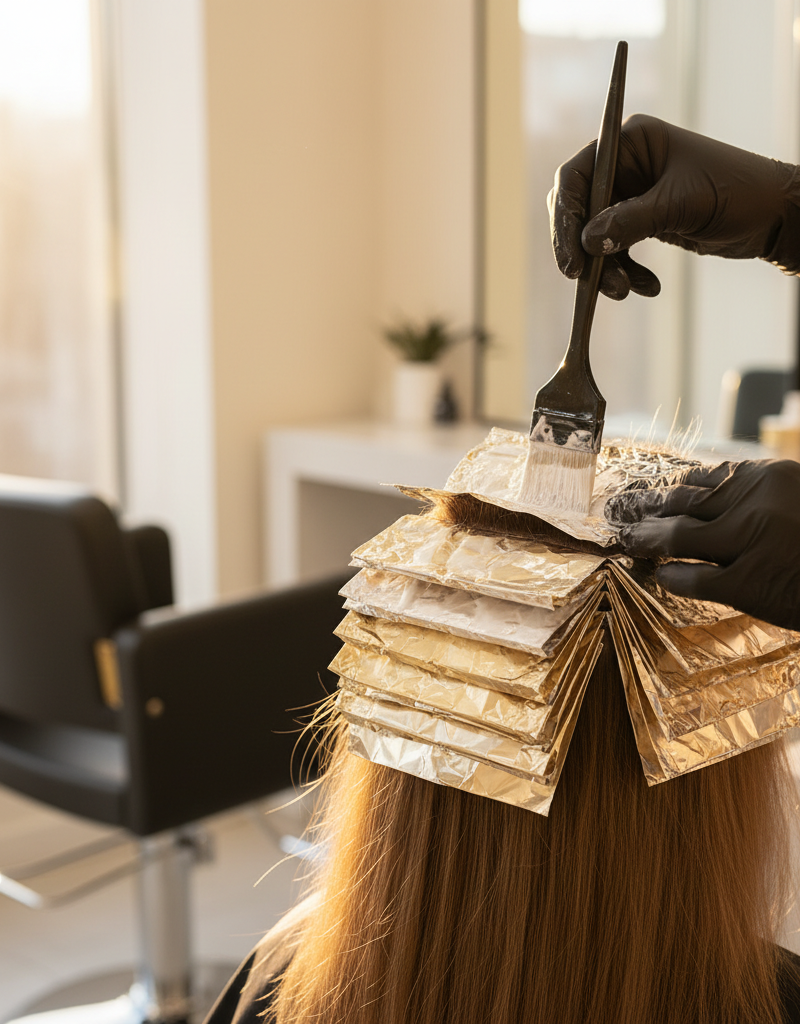
How many times has this happened to you? Your client wants spectacular platinum blonde and you end up with straw-like, elastic hair or, worse, breakage. Bleaching is one of the most requested techniques and, at the same time, one that demands the most respect.
Professional hair bleaching consists of removing natural hair pigment (melanin) through an oxidative chemical process, allowing you to achieve light tones that dye alone cannot achieve. But here’s the key: it’s not about how much you lighten, but how you do it.
If you master the lifting stages, timing, and the right products, you can achieve flawless blondes while maintaining hair integrity. In this guide we’ll see exactly how to do it.
This article is part of our complete guide to professional coloring techniques, where you’ll find the context for all lightening techniques.
What Is Bleaching and How Does It Work
Bleaching is a chemical process that oxidizes and dissolves melanin in the hair. Unlike dye, which deposits pigment while slightly lightening, bleach only removes color.
The Chemical Process
According to the Society of Cosmetic Chemists, bleaching works in three phases:
- Cuticle opening: Ammonia or alkaline substitutes raise the hair’s pH (from its natural 4.5-5.5 up to 9-11) and open the protective scales
- Penetration: Hydrogen peroxide enters the hair cortex
- Melanin oxidation: Natural pigments break down and become colorless
This process is irreversible. Once you remove melanin, it doesn’t come back. That’s why precision in each step is fundamental.
Difference Between Bleaching and Lightening with Dye
| Aspect | Bleaching | Lightening dye |
|---|---|---|
| Lifting power | 6-8 levels | Maximum 4 levels |
| Deposits pigment | No | Yes |
| Potential damage | Higher | Lower |
| Control | More difficult | Easier |
| Uses | Extreme blondes, base for fashion colors | Moderate changes |
Pro tip: If your client only needs 2-3 tones of lift, consider a high-lift dye before resorting to bleach. Less damage, same result.
Bleaching Stages: The Lifting Map
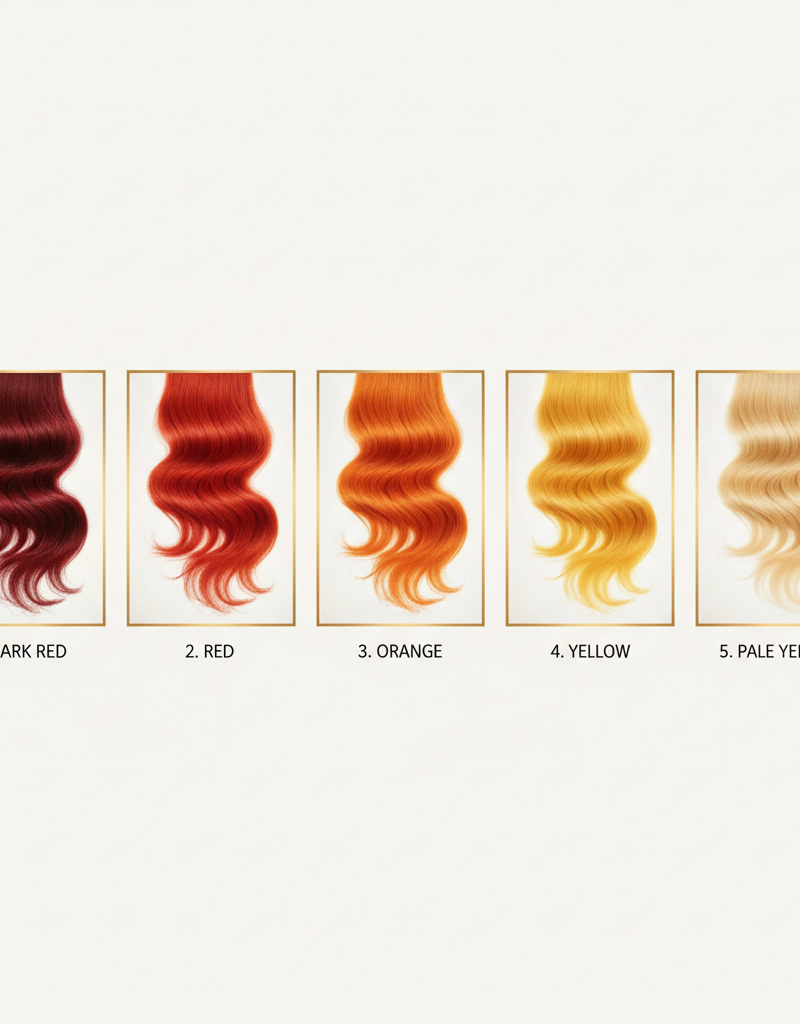
Understanding bleaching stages is fundamental for predicting results and knowing when to stop. Each lifting level goes through specific color phases.
Stage Chart by Level
| Starting level | Stage 1 | Stage 2 | Stage 3 | Stage 4 |
|---|---|---|---|---|
| 1-2 (Black) | Dark red | Red | Red-orange | Orange |
| 3-4 (Brown) | Red-orange | Orange | Orange-yellow | Yellow |
| 5-6 (Light brown) | Orange | Orange-yellow | Yellow | Pale yellow |
| 7-8 (Blonde) | Orange-yellow | Yellow | Pale yellow | Almost white |
Why Knowing the Stages Matters
When a level 4 client says “I want platinum blonde,” you’re looking at a journey from red-orange → orange → yellow → pale yellow → platinum. That’s at least 5-6 levels of lift.
Knowing these stages allows you to:
- Predict the outcome based on exposure time
- Stop at the right moment without over-processing
- Choose the right toner for the resulting undertone
- Manage expectations with your client
To better understand underlying pigments, check out our basic colorimetry guide.
Bleaching Products: Know Your Tools
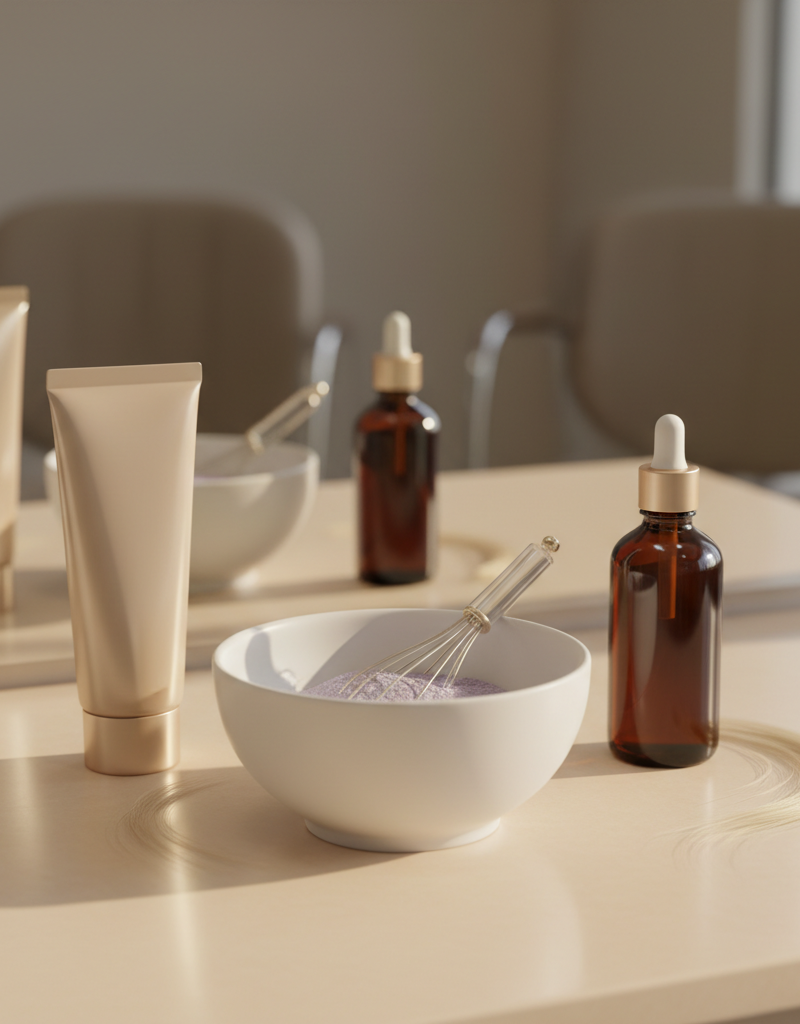
Types of Bleach
Powder Bleach (Most Common)
- Advantages: Greater lifting power, versatile
- Disadvantages: Can be drying, requires monitoring
- Use: Highlights, balayage, global bleaching
Cream Bleach
- Advantages: More moisturizing, easier to control
- Disadvantages: Less lifting power
- Use: Delicate areas, touch-ups, sensitive hair
Oil Bleach
- Advantages: Very gentle, good hydration
- Disadvantages: Limited lift (2-3 tones)
- Use: Subtle highlights, fragile hair
Developers for Bleaching
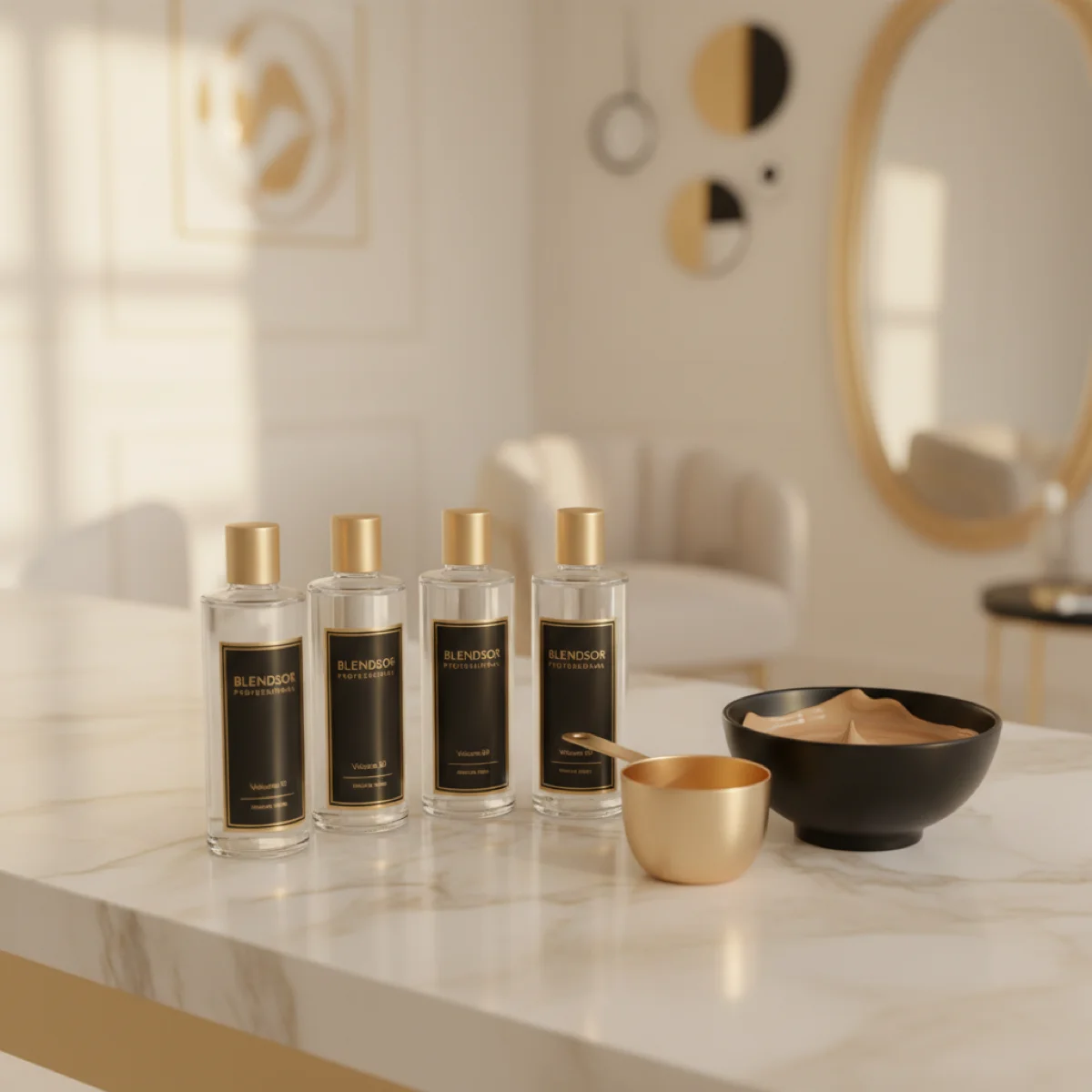
The choice of developer is critical. More volume doesn’t mean better results:
| Volume | Bleaching Use | Precautions |
|---|---|---|
| 20 vol | Slow techniques, sensitive hair | Longer exposure time |
| 30 vol | Professional standard, good balance | Check every 10 min |
| 40 vol | Resistant hair, fast techniques | High damage risk |
For more on developers, review our developer volumes guide.
Pro tip: The secret of the best colorists isn’t using 40 vol to go faster. It’s using 20-30 vol with impeccable technique and patience.
Additives and Protectors
Bond protectors (like Olaplex, Fibreplex, Smartbond) have revolutionized bleaching. According to research from the Professional Beauty Association, these products can reduce hair breakage by up to 68% during the lightening process.
When to use them:
- Always in bleaching more than 3 levels
- On previously treated hair
- In techniques requiring long exposure times
Step by Step: Safe Professional Bleaching
I remember a client who came in after trying to bleach her hair at home. Level 5 hair, wanted platinum, used 40 vol without protector and left the product on for 90 minutes. The result: intense orange in the mid-lengths, “hot roots” (lighter than the rest), and elastic ends that broke at the slightest touch. It took us three recovery sessions before we could continue lightening. This case perfectly illustrates why each step of the protocol exists.
Before Starting: The Diagnosis
Never apply bleach without evaluating:
- Chemical history: Previous dyes? Relaxers? Henna?
- Cuticle condition: High, medium or low porosity?
- Elasticity: Does the hair bounce back or break when stretched?
- Strand test: Mandatory in doubtful cases
Product Preparation
Standard ratio: 1 part powder + 2 parts developer
Example for full head:
- 60g bleach powder
- 120ml 30 vol developer
- 5-10ml bond protector
Ideal consistency: Like creamy yogurt. If it’s too runny, it drips and stains. If it’s too thick, it doesn’t penetrate well.
Application Step by Step
1. Section Correctly
Divide hair into 4 quadrants:
- Lower nape
- Upper nape
- Sides
- Crown
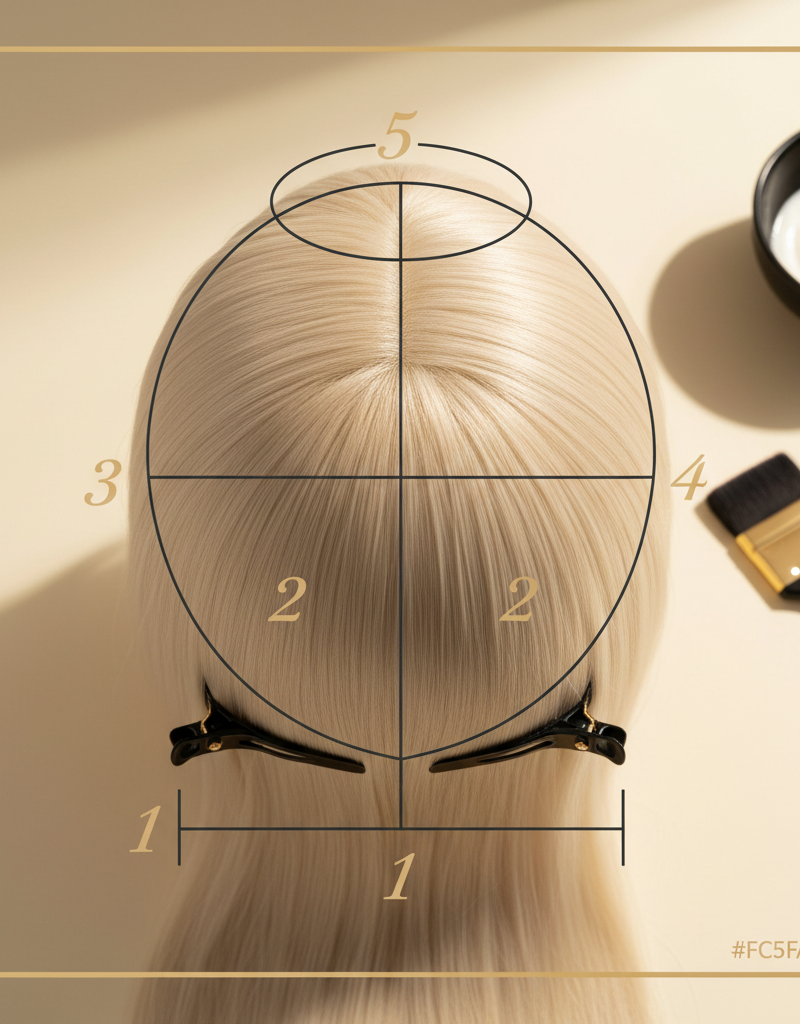
Always start at the nape: It’s the most resistant area and takes longer to lighten.
2. Apply Mid-Lengths to Ends First
The ends are usually more porous and lighten faster. By applying to mid-lengths first, when you get to the roots, the lift will be more even.
Sequence:
- Mid-lengths and ends on the entire head
- Roots (15-20 minutes later)
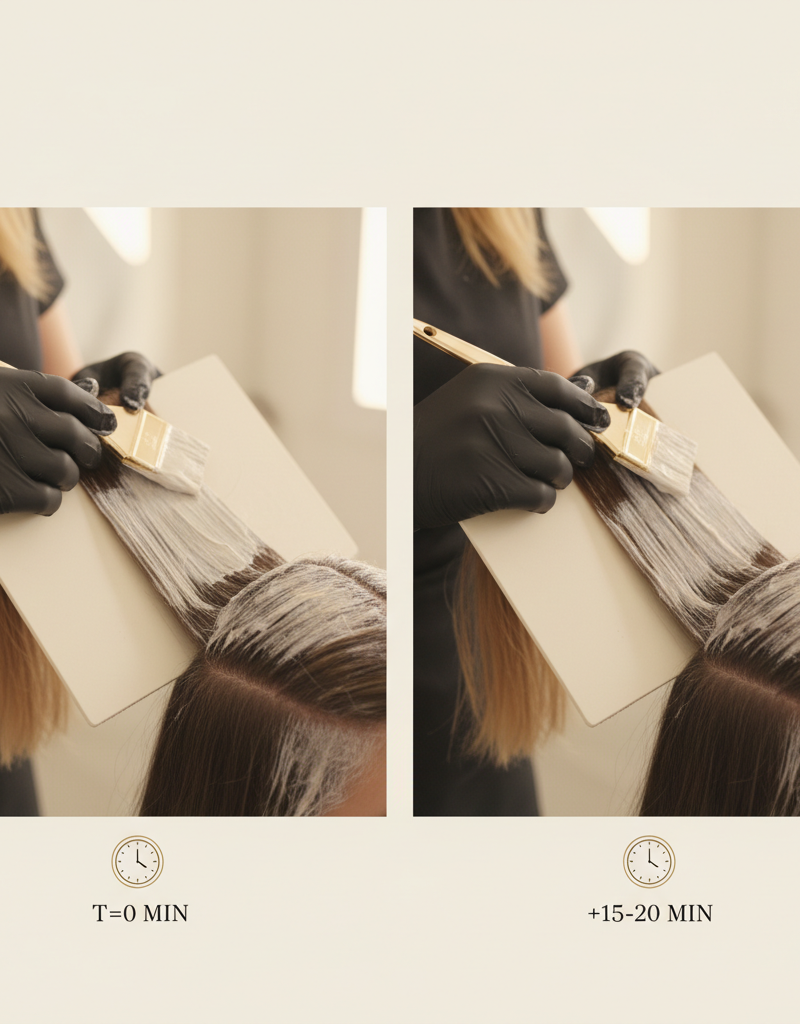
3. Saturation Technique
- Enough product: Hair should be completely covered
- Don’t compress: Don’t crush the hair with the product
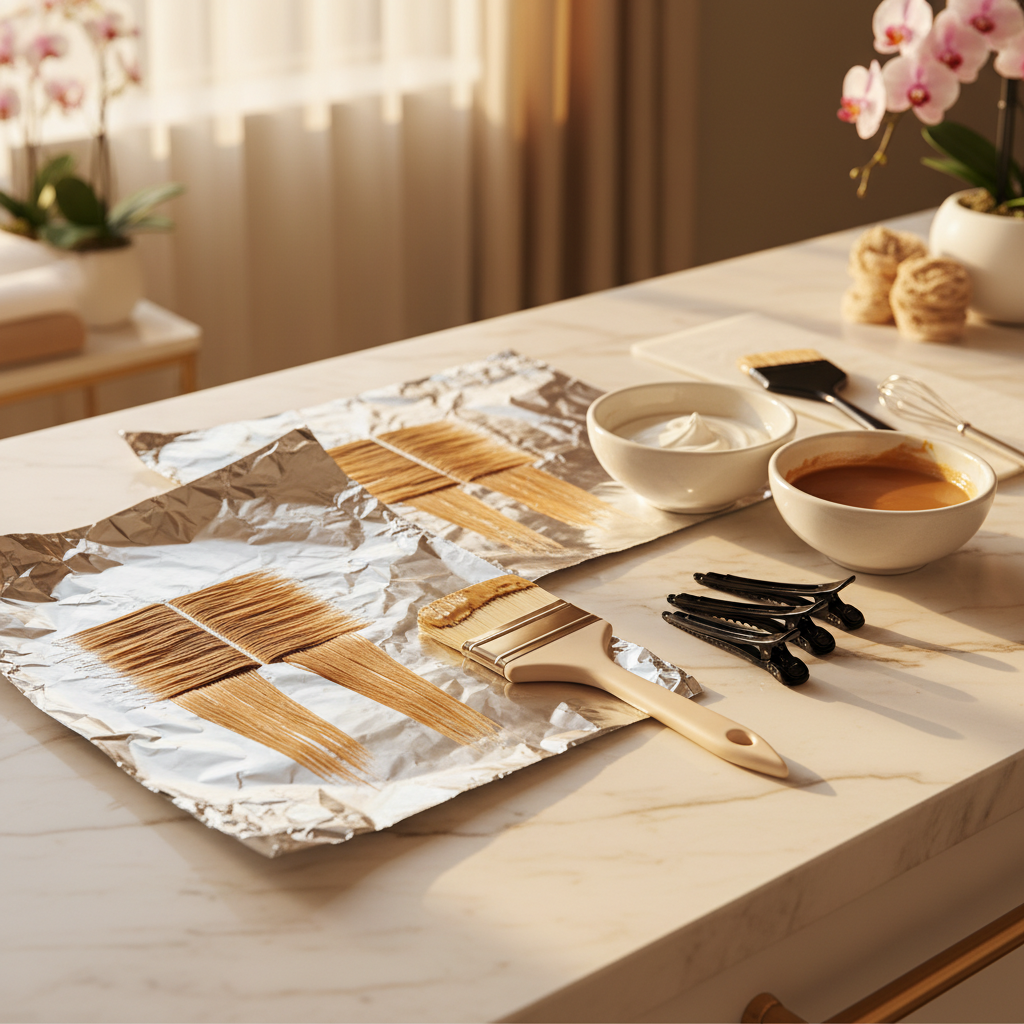
- Separation: Use foil or plastic between sections if necessary
4. Time and Temperature Control
Scalp heat accelerates the process at roots. That’s why:
- Roots: Process faster (body heat)
- Mid-lengths and ends: Process slower (room temperature)
Approximate timing (checking every 10 minutes):
| Goal | Approximate total time |
|---|---|
| 2-3 levels | 20-30 minutes |
| 4-5 levels | 30-45 minutes |
| 6+ levels | 45-60 minutes (may require second application) |
Warning: Never leave bleach on for more than 50-60 minutes. After that time, the product stops working but continues damaging.
Removal and Post-Care
- Emulsify: Add water to the bleach and massage gently
- Rinse with warm water: Not hot, it irritates the scalp
- Gentle shampoo: Post-bleach specific if possible
- Conditioner or mask: Restore moisture
- Evaluate the result: Did you reach the desired level?
Application Techniques by Service
Global Bleaching
For complete color changes. The most technically demanding.
Key: Uniformity. All sections must lighten equally.
Foil Highlights
Aluminum foil retains heat and speeds up the process. To master this technique, check the highlights section in our coloring techniques guide.
Key: Monitor more frequently (every 7-10 minutes).
Balayage and Open Techniques
Without foil, the product works at room temperature.
Key: Thicker consistency so it doesn’t drip.
Staged Bleaching (Multiple Sessions)
For very dark or damaged hair that can’t reach the desired level in one session.
Protocol:
- First session: Lighten to orange-yellow
- Wait 2-4 weeks with intensive treatments
- Second session: Take to final level
Common Mistakes and How to Avoid Them
1. Starting at the Roots
The problem: Roots lighten faster due to body heat. If you start there, you’ll have lighter roots than mid-lengths.
The solution: Mid-lengths and ends first, roots 15-20 minutes later.
2. Insufficient Product
The problem: Hair isn’t completely covered and lifting is uneven.
The solution: More product than you think you need. The bleach shouldn’t “disappear” absorbed by the hair.
3. Not Monitoring the Process
The problem: You leave the product working and come back late. Over-processing, damage, breakage.
The solution: Timer every 10 minutes. Visually check how the lift is progressing.
4. Same Developer for Everything
The problem: Using 40 vol on scalp or already porous hair.
The solution: Adapt the volume to each area. Roots with lower volume, mid-lengths/ends can tolerate more if they’re healthy.
5. Ignoring History
The problem: On hair with previous dye, bleach can give unpredictable results.
The solution: Always ask. Always do a strand test in doubtful cases.
Post-Bleach Toning
Bleaching is rarely the final step. You almost always need to tone to get the desired shade.
When to Tone
- Pale yellow undertone: Violet toner for cool blondes
- Yellow undertone: Violet + ash for neutrals
- Orange-yellow undertone: Needs more lift or blue direct pigment
Toning Products
| Type | Power | Duration | Use |
|---|---|---|---|
| Toner | Medium | 4-6 washes | Subtle changes |
| Semi-permanent dye | High | 6-12 washes | Specific tones |
| Direct pigment | Variable | Depends on product | Fashion colors, corrections |
To master neutralization, review our colorimetry guide and the specific article on how to neutralize unwanted tones.
Bleached Hair Maintenance
In Salon
- Reconstructive treatments: Every 4-6 weeks
- Root touch-ups: Only the growth area
- Maintenance toning: To preserve the tone
At Home (Client Recommendations)
- Sulfate-free shampoo
- Moisturizing mask 1-2 times per week
- Heat protectant always
- Purple shampoo once a week (if cool blonde)
Frequently Asked Questions
How Many Levels Can I Lift in One Session?
On virgin, healthy hair, you can lift up to 6-7 levels in one session with correct technique and quality products. However, if hair has chemical history or is damaged, limit to 3-4 levels and schedule additional sessions. Hair health is always a priority over immediate results.
Can I Bleach Hair Dyed Dark?
Yes, but with precautions. Artificial dye is harder to remove than natural melanin. You’ll need more time and possibly multiple sessions. Always do a strand test first, as some dyes react unpredictably with bleach.
How Long Should Pass Between Bleaching Sessions?
Minimum 2-4 weeks between sessions, with intensive treatments in between. This time allows the cuticle to partially close and the hair to recover some structure. Speeding up the process means risking breakage.
Why Does Hair Turn Orange Instead of Blonde?
Orange is a natural stage of the bleaching process. It appears because you removed part of the melanin, but not all of it. If the goal was blonde and it stayed orange, it means you need more processing time or a second application. Never try to “cover” orange with blonde dye: it will turn greenish or muddy.
Is It Safe to Bleach at Home?
Professional bleaching requires technical knowledge, quality products and constant monitoring. Home kits have significant limitations and the margin of error is high. For safe and predictable results, it’s always best to see a professional.
Recommended Products for Professional Bleaching
These are the products we use and recommend for safe bleaching with predictable results:
- Olaplex No.1 + No.2 — The standard for bond protection. Reduces breakage by up to 68%. Essential for lightening more than 3 levels.
- Schwarzkopf BlondMe Premium Lightener — High-performance bleach powder. Lifts up to 9 levels with built-in anti-yellow formula.
- Schwarzkopf Fibreplex — Alternative to Olaplex with fiber technology. Excellent value for high-volume salons.
- Wella BlondorPlex — Bleach powder with built-in bond protection. Less dust, easier to mix. When switching between toner brands after bleaching, check equivalences with our hair color brand converter.
- L’Oreal Platinium Plus — Lightening paste (no powder). Ideal for open-air techniques like balayage.
This article contains affiliate links. If you purchase through them, we receive a small commission at no additional cost to you. We only recommend products that trusted professionals endorse.
In Summary
Professional bleaching is based on these principles:
- Diagnosis first: Never apply without evaluating the hair
- Predictable stages: Knowing the lifting undertones gives you control
- Technique over speed: Less volume + more time = better result
- Constant monitoring: Check every 10 minutes without exception
- Final toning: Bleaching is the canvas, toner is the finish
Mastering bleaching opens the doors to the most requested and best-paid services in the salon. But it requires practice, patience and absolute respect for hair integrity.
Want personalized bleaching formulas based on your client’s hair? Try Blendsor for free. The AI analyzes hair condition and suggests the optimal lightening protocol.
What’s been your biggest bleaching challenge? Do you have a go-to trick that always works?
Related articles

Practice with our free tools
Calculators, neutralization wheel, AI consultation...
Master this technique with exact formulas
Blendsor generates the precise formula for each technique with your brand products. Try the mix calculator or download the app.
Download free