Shadow Root: How to Create Perfect Blended Roots
Master the shadow root technique step by step. Formulas, application tips and advice to create blended roots that reduce maintenance.
Blendsor
Blendsor Team
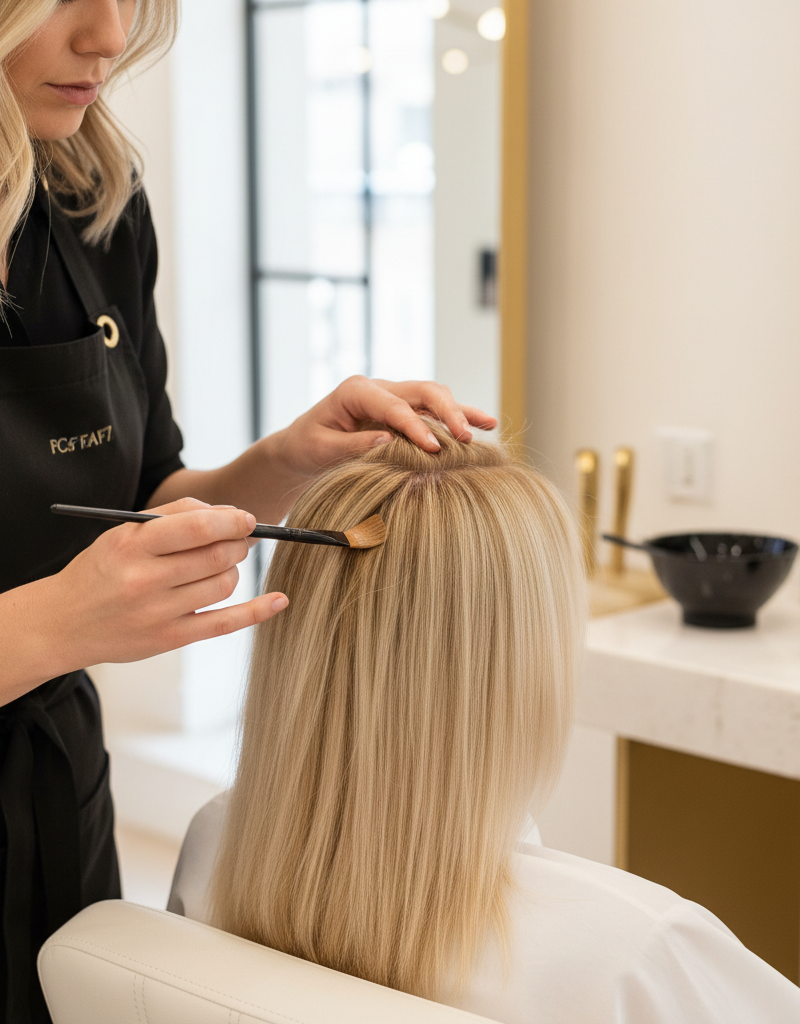
How many clients ask you for “something that won’t show when it grows out”? Probably most of them. Constant maintenance is the biggest enemy of blondes. Every 4-6 weeks, the line of demarcation appears like a neon sign saying “time for a touch-up.”
The shadow root is the solution many colorists have been searching for. This technique creates a smooth transition between the natural root and the colored lengths, eliminating that harsh line that gives away regrowth. According to Modern Salon, shadow root has become one of the most requested services in 2026 precisely for this reason.
In this guide, you’ll learn exactly how to execute a professional shadow root, which formulas to use, and the mistakes to avoid. This technique is part of our complete guide to professional coloring techniques.
What Is Shadow Root and Why Does It Work
Shadow root is a coloring technique that intentionally darkens the first 1-2 cm of root and blends downward toward the lighter lengths, creating a gradual transition with no line of demarcation. It uses demi or soft permanent color (10-20 vol developer), requires no bleach, and allows hair to grow 8-12 weeks without visible regrowth.
| Benefit | Description |
|---|---|
| Low maintenance | Touch-up every 8-12 weeks (vs 4-6 weeks without shadow) |
| Natural effect | Mimics how the sun lightens hair from the ends |
| Versatility | Works on blondes, brunettes, and even redheads |
| No damage | No bleach applied; low developer |
| Adds depth | Eliminates the “helmet” effect of uniform blondes |
The magic lies in visual psychology: when the root blends smoothly with the rest of the hair, the eye doesn’t perceive where the color begins and ends.
Pro tip: Shadow root is especially useful for clients who want to be blonde but have dark natural roots (level 2-5). It allows them to enjoy blonde hair without the slavery of monthly touch-ups.
Shadow Root Step by Step: Complete Technique
Let’s get into the detailed process. This technique is normally executed as the final step, after any lightening service.
Step 1: Pre-Assessment
Before starting, evaluate:
- Natural root level: This determines whether you need to darken or just blend
- Length level: The contrast between root and length defines the shadow intensity
- Current line of demarcation: Is it very marked? How many centimeters of regrowth?
- Maintenance goal: Does she want 6 weeks? 12 weeks?
Check our colorimetry basics guide if you need to refresh concepts on levels and undertones.
Step 2: Prepare the Formula
The shadow root formula depends on the desired contrast:
Basic shadow root formula:
- Demi-permanent or soft permanent color
- Level 1-2 tones darker than the blonde on lengths
- Low developer (10 vol for demi, 20 vol for permanent)
- Standard ratio from manufacturerImportant: Always use natural tones or those with a slight ash/beige reflect. Intense warm reflects (copper, strong gold) can look artificial on the root.
Step 3: Root Application
This is where many fail. The application must be precise but gentle:
- Section the hair into 4 quadrants
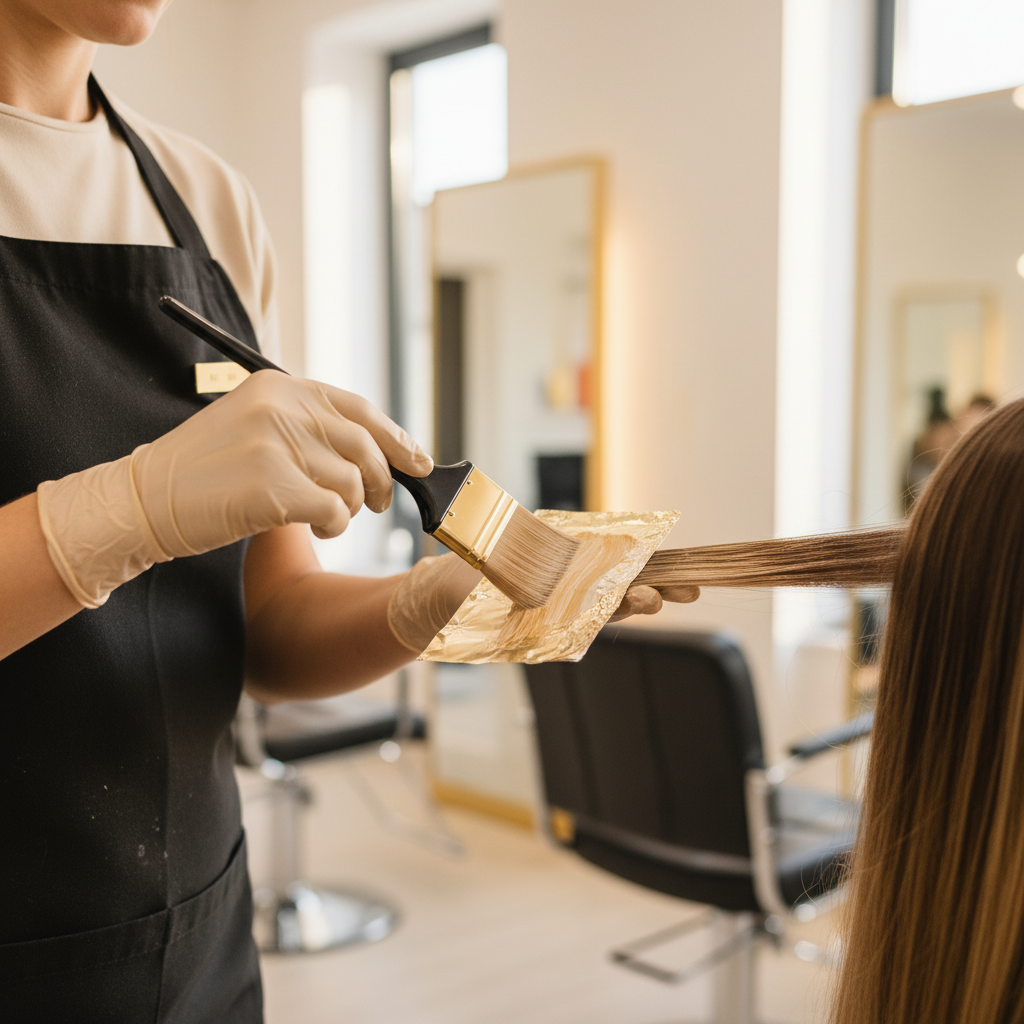
- Apply product to the root: Only the first 1-2 cm
- Work quickly: You have little product, don’t linger
- Cover the entire hairline: Forehead, temples, nape
Don’t worry about perfection in this step. The next step is what defines the result.
Step 4: The Blending (The Key to Shadow Root)
This is the step that separates a professional shadow root from an amateur one:
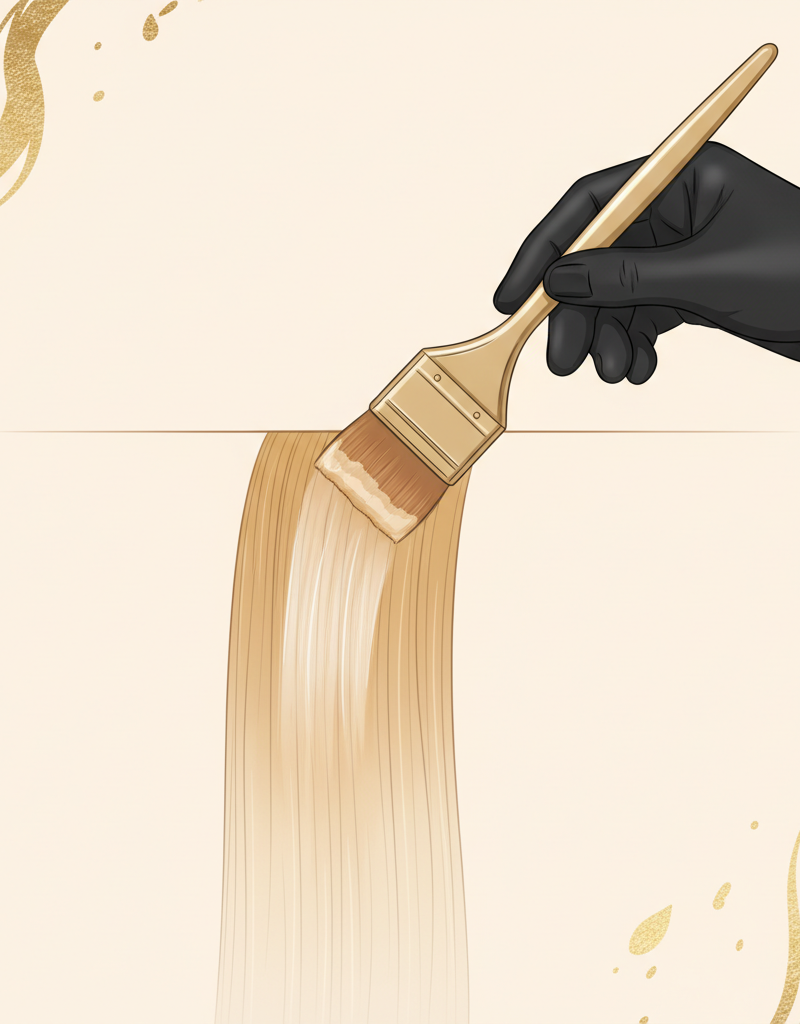
- Wait 5 minutes after applying to root
- With a clean brush or comb, drag the product downward
- Vertical movements: Top to bottom, never horizontal
- Less product each time: The brush should naturally discharge
- Blending extension: 3-5 cm depending on desired effect
The transition must be imperceptible. There should be no visible line where the shadow ends and the blonde begins.
Step 5: Processing Time
Time varies depending on the product:
| Product Type | Time on Root | Total Time |
|---|---|---|
| Demi-permanent | 15-20 min | 20-25 min |
| Soft permanent | 20-25 min | 25-30 min |
| Gloss/toner | 10-15 min | 15-20 min |
Pro tip: Monitor development every 5 minutes. The shadow root should look subtle, not like a dark stain. If it darkens too much, emulsify immediately.
Step 6: Rinse and Finish
- Emulsify with warm water before rinsing completely
- Wash with gentle shampoo (not clarifying)
- Apply conditioner only to mid-lengths and ends
- Dry and evaluate: The shadow should look natural, not artificial
Shadow Root Formulation by Level
Correct tone selection is critical. Here are the most effective combinations:
For Blondes Level 8-10
| Length Level | Shadow Root Tone | Result |
|---|---|---|
| 10 (extra light blonde) | 8.0 or 8.1 | Subtle, very natural |
| 9 (very light blonde) | 7.0 or 7.1 | Natural, defined |
| 8 (light blonde) | 6.0 or 6.1 | More contrast |
For Light Brunettes Level 6-7
| Length Level | Shadow Root Tone | Result |
|---|---|---|
| 7 (dark blonde) | 5.0 or 5.1 | Natural depth |
| 6 (light brown) | 4.0 or 4.1 | More dramatic |
Complete Formula Example
Client: Level 9 blonde, natural root level 5, wants low maintenance
Shadow root:
- 30g color 7.1 (medium ash blonde)
- 45g 10 vol developer
- Apply 1.5 cm on root
- Blend 4 cm downward
- Time: 20 minutes
Shadow Root vs Root Smudge vs Root Melt: Differences
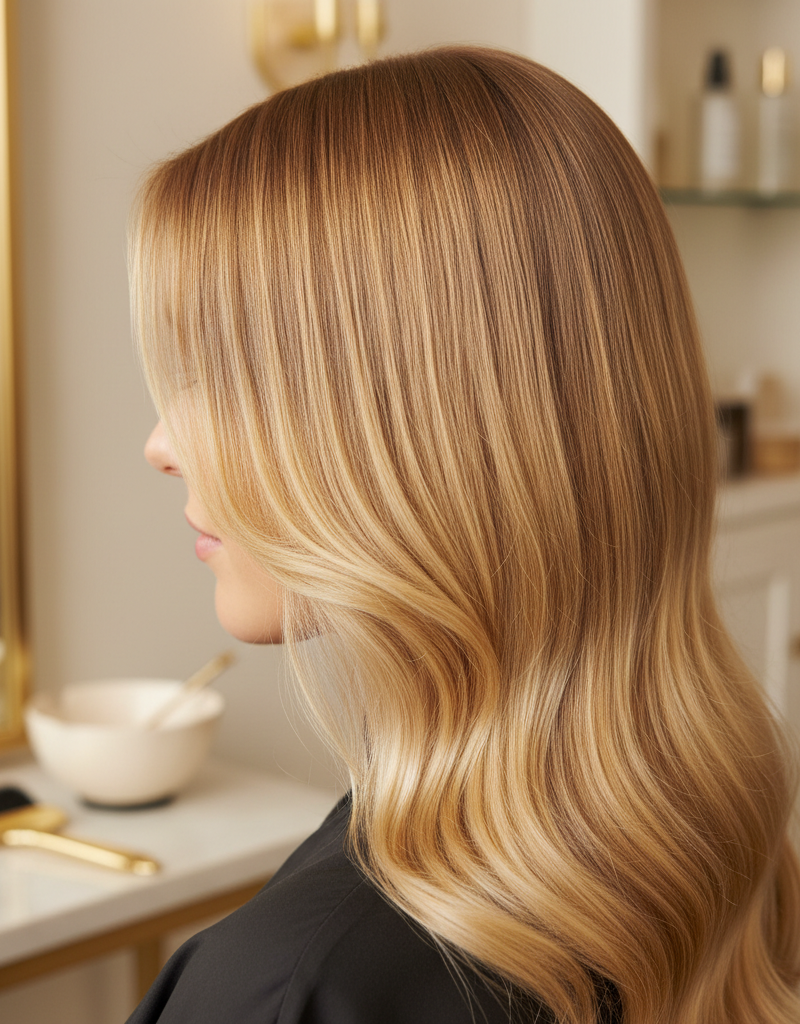
These terms are sometimes used interchangeably, but they have nuances:
| Technique | Working Zone | Blending | Duration |
|---|---|---|---|
| Shadow root | Root (1-2 cm) | Gradual downward | Long-term |
| Root smudge | Root + simultaneous blending | Immediate, less defined | Medium-term |
| Root melt | Root + mid-lengths | Fusion of multiple tones | Variable |
When to Choose Each
- Shadow root: Client wants definition and maximum duration
- Root smudge: Quick maintenance service, softer effect
- Root melt: Creative transitions with multiple tones
For more complex blending techniques, check our article on foilyage step by step.
Common Mistakes and How to Avoid Them
1. Choosing a Tone Too Dark
The mistake: Using a shadow 3-4 levels darker than the length.
The consequence: “Dirty root” effect instead of “natural root.”
The solution: Maximum 2 levels of difference. Less is more in shadow root.
2. Not Blending Correctly
The mistake: Leaving a line where the shadow ends.
The consequence: Looks like a mistake, not an intentional technique.
The solution: Dedicate time to blending. Use a soft brush and vertical movements until you see no transition.
3. Applying Too Much Product
The mistake: Saturating the root as if it were a normal color application.
The consequence: Color extends more than desired, darkens too much.
The solution: Minimal amount. Shadow root is a wash of color, not full coverage.
4. Using Intense Warm Tones
The mistake: Shadow root with copper or strong gold reflects.
The consequence: Artificial appearance, especially on cool blondes.
The solution: Natural tones (.0) or ash (.1). Beige (.2) also works. Avoid .3 (gold), .4 (copper), and .6 (red) in the shadow.
5. Not Considering Client’s Undertone
The mistake: Ash shadow on a warm-toned client, or vice versa.
The consequence: The root “clashes” with the rest of the look.
The solution: Harmonize the shadow with skin undertone. Ash for cool skin, beige/neutral for warm skin.
Frequently Asked Questions
Does shadow root damage hair?
No. Shadow root is applied with low developers (10-20 vol) and involves no bleaching. It’s one of the gentlest techniques you can offer. In fact, according to the Professional Beauty Association, reducing bleaching frequency is one of the best ways to maintain hair integrity.
How long does shadow root last?
A well-executed shadow root can last 8-12 weeks without needing a touch-up. The key is choosing the correct tone and blending well. Some clients can stretch to 16 weeks if the original contrast was subtle.
Can shadow root be done at home?
Technically yes, but professional results require product control and blending technique that’s difficult to replicate without training. It’s one of the techniques where the difference between professional and amateur is most evident.
Does shadow root work on gray hair?
It depends on the percentage. If she has less than 30% scattered grays, shadow root can partially camouflage them. With more than 30% or grays concentrated at the root, she’ll need traditional coverage first. The shadow root would be the final step to soften the transition.
Can I combine shadow root with balayage or highlights?
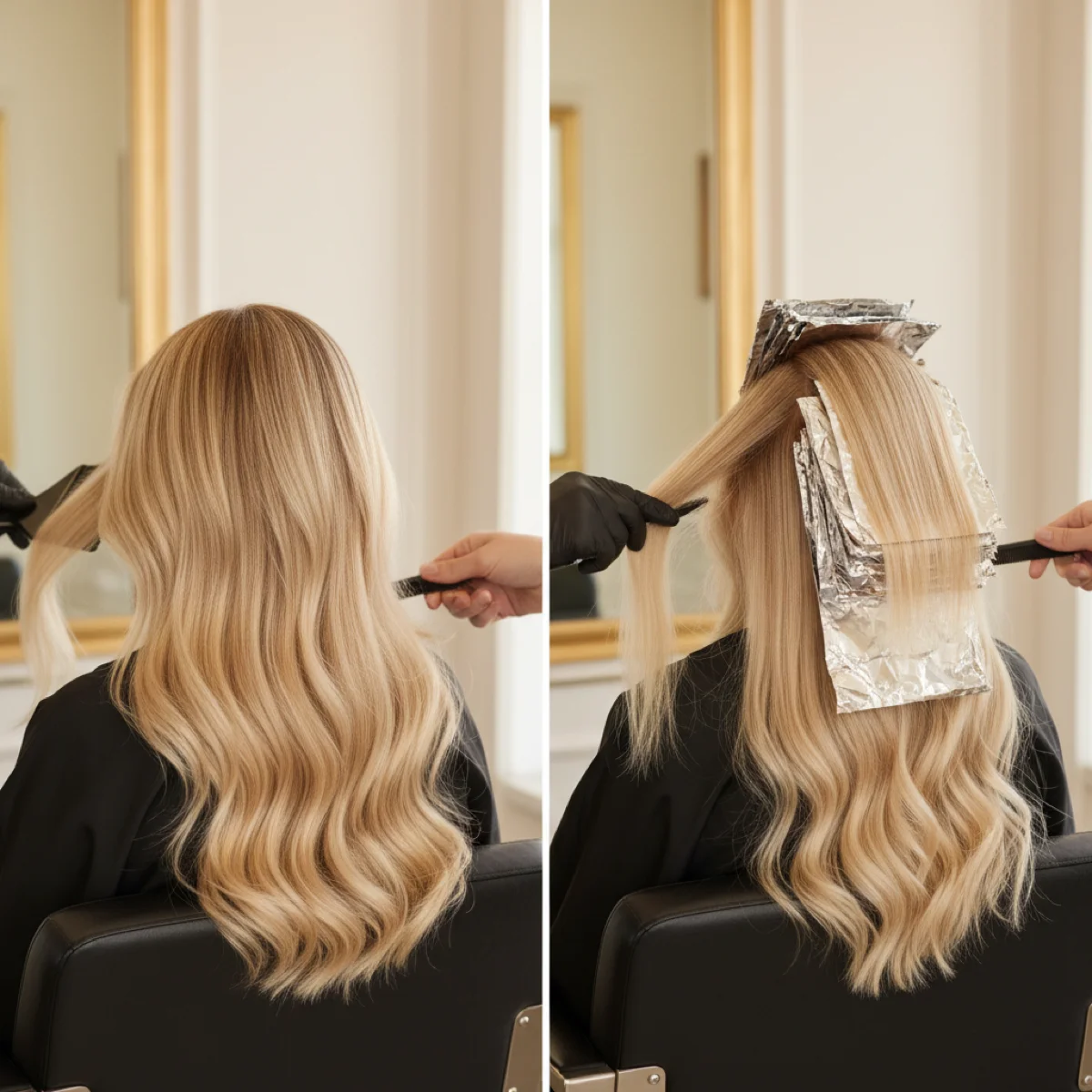
It’s the ideal combination. Shadow root is applied as the final step after any lightening service. In fact, balayage or foilyage without shadow root can leave the root too marked. The shadow completes the look and maximizes longevity.
In Summary
Shadow root is an essential technique for any modern colorist:
- Reduces maintenance: From 4-6 weeks to 8-12 weeks between services
- Natural effect: Mimics how hair lightens naturally
- Versatile: Works with any previous lightening technique
- Adds value: Additional service that improves client satisfaction
Mastering shadow root means offering your clients beautiful blondes without the slavery of constant touch-ups. And that translates to happier, more loyal clients.
Want to calculate exact shadow root formulas for each client? Try Blendsor free. The AI analyzes the natural level, the goal, and suggests the optimal formulation.
This article is part of our complete guide to professional coloring techniques. Explore other techniques like foilyage, babylights, and color melting.
Related articles
Practice with our free tools
Calculators, neutralization wheel, AI consultation...
Master this technique with exact formulas
Blendsor generates the precise formula for each technique with your brand products. Try the mix calculator or download the app.
Download free