How to Photograph Your Hair Color So It Looks Real
Flash flattens the tone, warm bulbs turn it yellow and cool LEDs wash it out. Photograph your hair color and show it the way it really is.
Blendsor
Blendsor Team
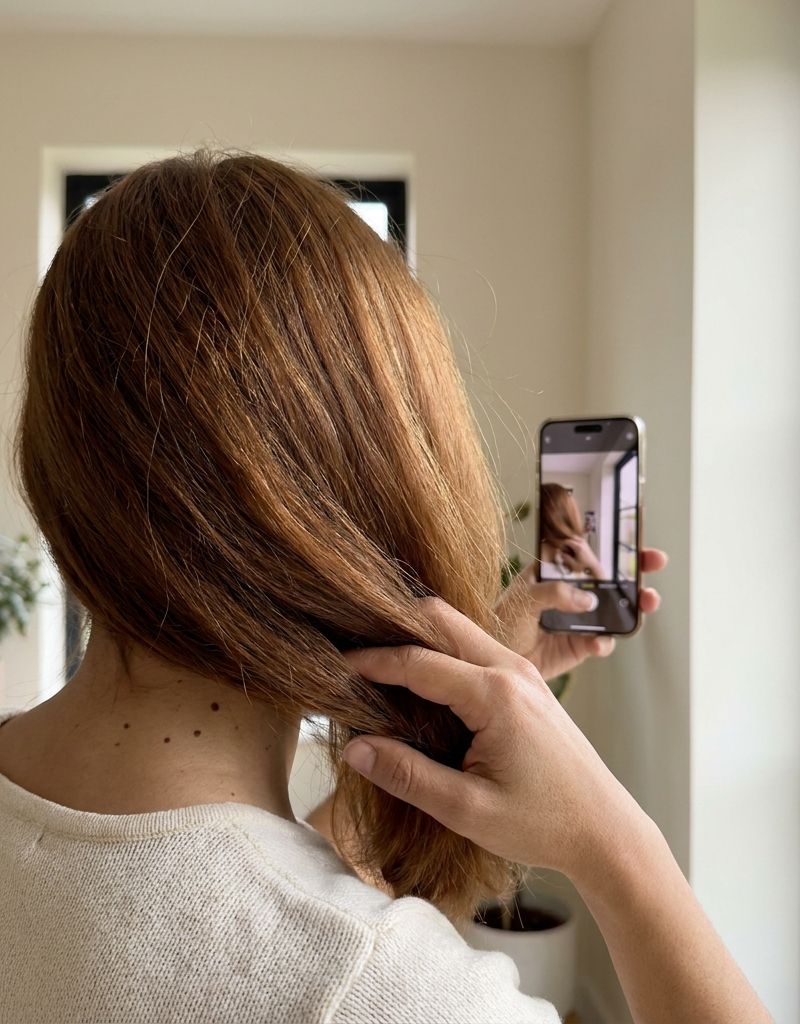
You leave the salon with your color freshly done. In the elevator you take a photo and it looks lighter. That night, in the bathroom mirror, it reads yellow. And in the picture someone sends you after dinner, the tone doesn’t match either of the first two.
Did your color break down in one afternoon? No. Your color doesn’t change between the salon and your home. The light hitting it does.
Here’s why it happens, what each light does to your tone, and the one photo that shows your color as it really is — the photo that’s actually useful when you talk to whoever does your color.
Quick summary: flash fires light straight at you and flattens the tone; warm bulbs turn everything yellow; cool LEDs drain the warmth and the shine; and your phone’s filters adjust your skin and drag your hair color along with it. The photo that works: dry hair, daytime, next to a window, no direct sun, no filter.
Why does the same hair color look different in every photo?
Because every light source has a color of its own, and your hair can only give back the light it receives. Light is measured in kelvins: a warm household bulb sits around 2,700 K — an orange-leaning light — while daylight runs closer to 6,500 K, far bluer, as described in the color temperature scale. Hair doesn’t get a vote: it reflects whatever reaches it. That’s how one head of hair can look like three different colors in a single afternoon.
The four usual suspects, one by one.
Flash: it flattens the tone and erases depth
Flash fires hard light straight at your hair. It fills in the shadows that give the hair its dimension, and the depth goes with them: hair comes out flat and lighter than it really is. The tone — that nuance your colorist layered on top, the part that shifts with the light — is the first thing to disappear.
Warm bulbs: everything goes yellow
The orange light of a warm bulb adds itself to your color. A cool blonde reads golden, a brown reads mahogany, and almost any shade “goes brassy” without the color itself having changed at all. It’s the same reason white clothes look cream under that lamp.
Cool LEDs: they drain warmth and shine
The cool LED lighting so many bathrooms have now does the exact opposite: it strips warmth out. A copper loses its life, a golden tone looks dull, and the overall shine drops a notch. It’s not your hair — it’s the bulb.
Phone filters: they drag your color along
Portrait mode and beauty filters are built for skin: they smooth it and correct its tone. The problem is they can’t tell where your face ends and your hair begins — they adjust the whole image, and your hair color gets pulled along with the edit.
| Light or setting | What it does to your color |
|---|---|
| Direct flash | Flattens the tone, erases depth, lightens |
| Warm bulb | Turns everything yellow |
| Cool LED | Drains warmth and dulls the shine |
| Filter or portrait mode | Adjusts skin and drags hair color with it |
| Window light, no filter | The most honest reference you have at home |
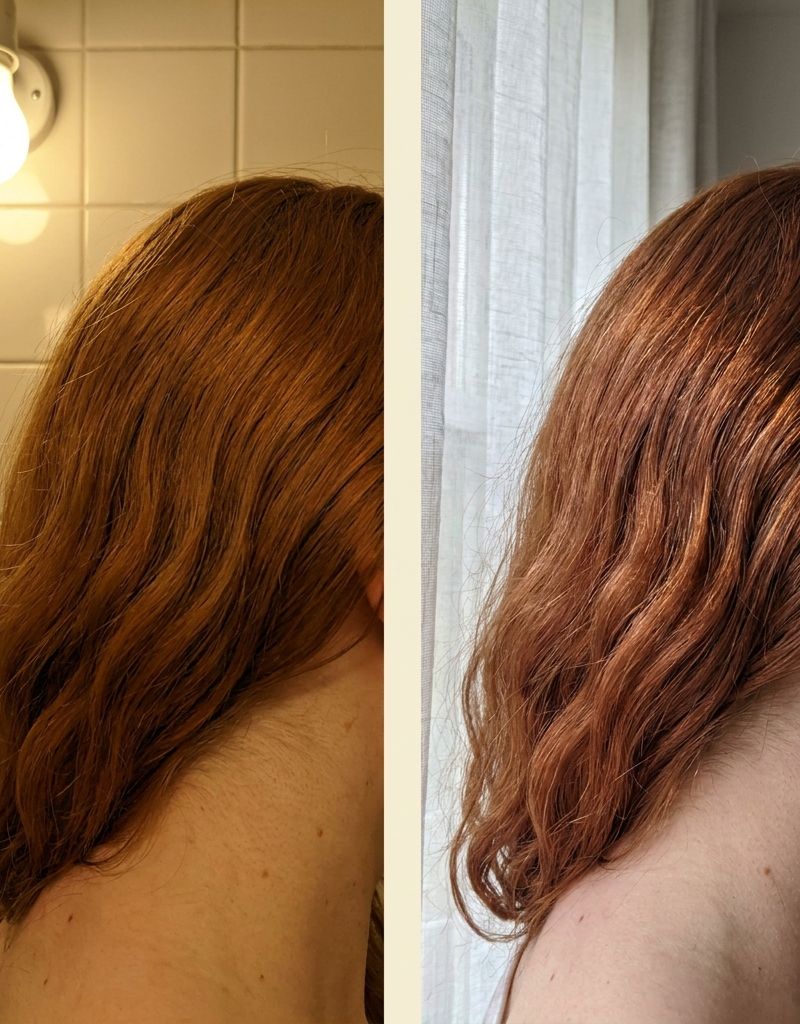
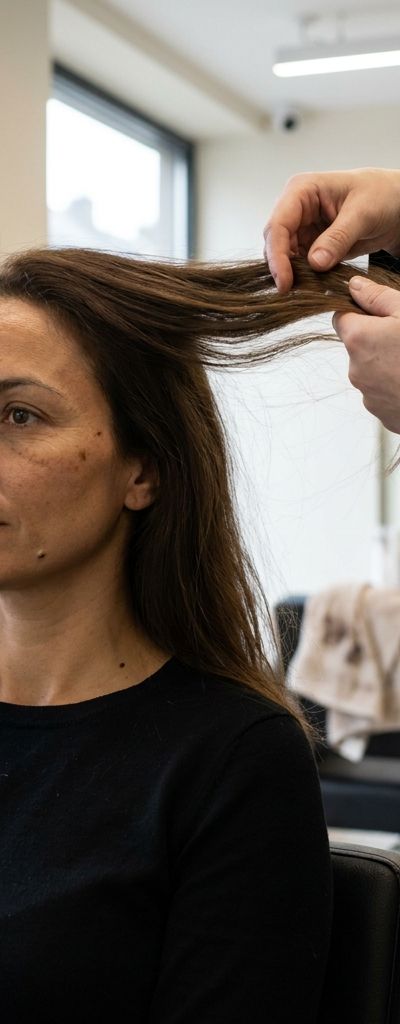
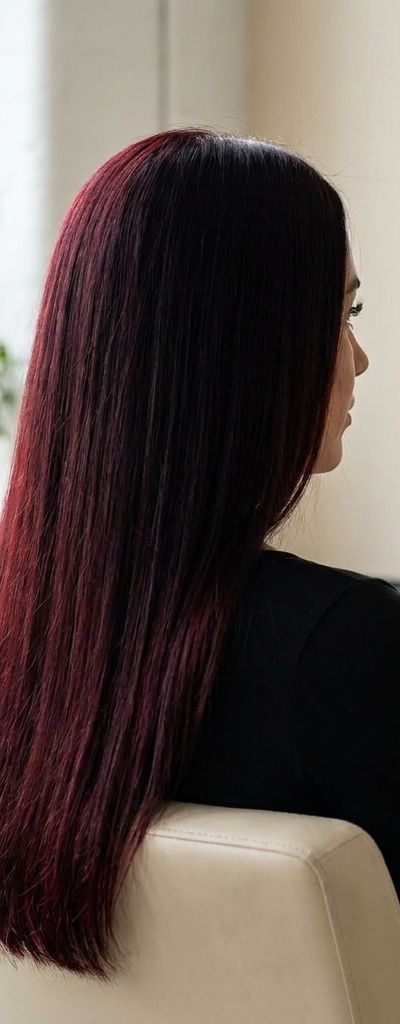
Same hair, same afternoon. Only the light changed.
What’s the photo that shows your real hair color?
Dry hair, daytime, next to a window, no direct sun on you, and no filter of any kind. That combination is the closest thing to neutral light you have at home, and it’s the photo that genuinely helps when you want to show how your color is doing.
The five points, with the why behind each:
- Completely dry hair. Wet hair — or hair with fresh product in it — looks darker and shines differently. Wait until it’s fully dry and loose, no ponytail, no elastic marks.
- Daytime. Every bulb, warm or cool, adds its own color to yours. Daylight is the only light that needs no translation.
- Next to the window, not under the ceiling light. Face the window, or stand side-on to it, with soft light reaching you. If the ceiling light is on, switch it off: mixing two light sources means stacking two problems.
- No direct sun. A 3 p.m. sunbeam exaggerates the tone and blows out the lighter pieces. Bright window light without the beam is better — an overcast day is actually ideal.
- No filter. No portrait mode, no auto-enhance, no gallery “improvement”. The boring photo is the useful one.
And two photos beat one: a section from around your face and another from the nape. They’re almost never the same — the front lives through more sun, more washing and more dryer heat than the back, and that difference is useful information for whoever does your color.
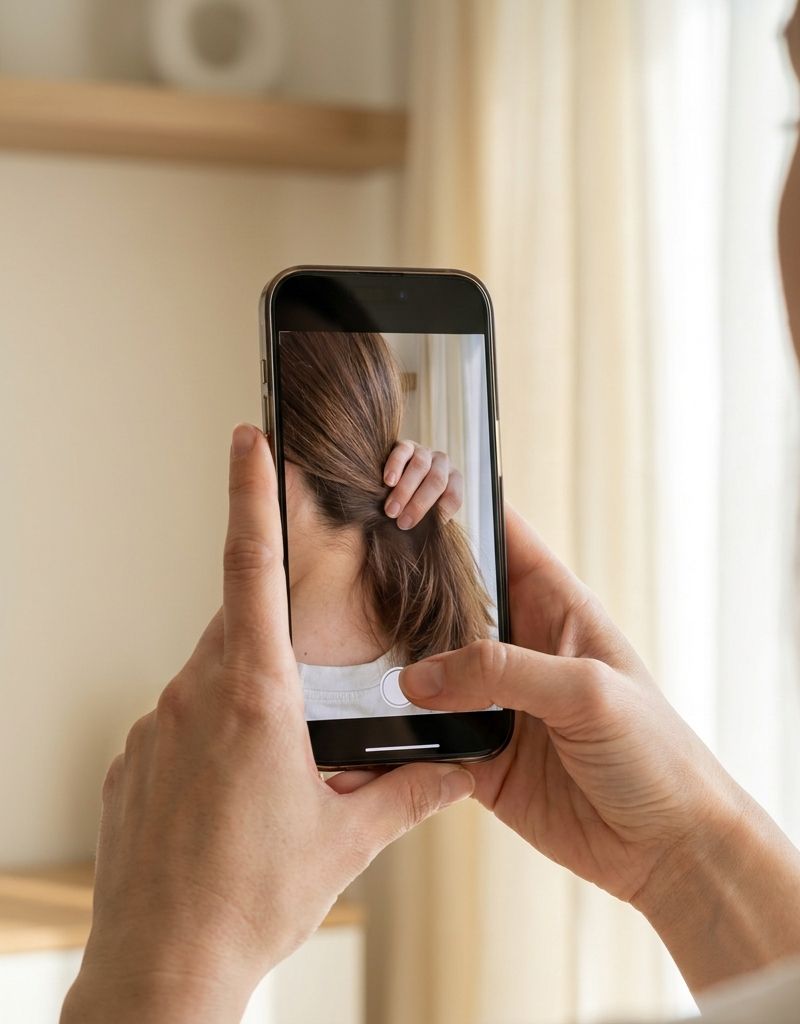
A window does more for your color than any filter.
What the photo can’t do
A good photo saves whoever does your color half of the questions. But it doesn’t replace any of them: decisions about your color are made with your hair in front of them, under the salon’s light, where they can move a section, check the root up close and compare zones a photo flattens. So much so that with dark shades, the exact depth is chosen based on the light you live in, not the reference photo — that story is told in the level is decided in the light, not the photo.
Think of your photo as the start of the conversation, not the diagnosis. And if what you’re preparing is your next appointment, what to tell your colorist before coloring covers what to bring up before you sit down.
What if the color looks off in every light?
Then it’s no longer the light. If the tone that surprises you shows up the same in the bathroom, next to the window and out on the street, something has genuinely changed: it could be the toner washing out, the root growing in, or something in your water at home. That situation has its own protocol — what to look at, what to say and in what order — in is your hair color fading?.
The short rule in the meantime: don’t buy anything and don’t try to fix it yourself. Take the photos exactly as described above and send them to whoever does your color before touching anything.
Common mistakes when photographing hair
- Taking the photo at night in the bathroom mirror. It combines the worst of both worlds: the bathroom bulb adding its own color, and the flash bouncing off the mirror. Neither of those is your hair.
- Holding up a sheet of paper or a white towel “for reference”. Most white things at home contain optical brighteners that tint the photo blue — you’re adding exactly the cast you wanted to rule out.
- Picking the filtered photo “because it looks better”. You look better; your color doesn’t. To show your hair, the unedited photo wins every time.
Frequently asked questions
Can I judge my color under bathroom light?
Not reliably. A warm bulb turns it yellow and a cool LED washes it out, so the bathroom almost always tells you a distorted version. Use it to style your hair; to evaluate the tone, go to a window in daylight.
Is a sunny day or a cloudy day better?
For photographing color, a cloudy day next to a window is more reliable. Direct sun exaggerates the tone and creates shine that hides the real shade; the diffused light of an overcast sky shows the color with fewer tricks.
Can I use portrait mode if the photo is to show my color?
Better not. Portrait mode applies skin adjustments that drag your hair tone along too, and it blurs areas that may matter, like the root or the ends. Regular camera, no filter, done.
How many photos should I send before an appointment?
Two as a base: one section from around your face and one from the nape, both in window light. And if your worry is that the tone has changed, add the photo from the day you left the salon so you can compare — is your hair color fading? covers what to send and why.
In short
- Your color doesn’t change: the light does. Flash flattens the tone, warm bulbs turn it yellow, cool LEDs drain it, filters drag it.
- The photo that works: dry hair, daytime, next to a window, no direct sun, no filter.
- Two sections: one from the face, one from the nape — they’re almost never the same.
- The photo opens the conversation, it doesn’t close it: decisions are made with your hair in front, under salon light.
- If it looks off in every light, it’s not the light: say so before touching anything.
Before you send that photo, one more thing
If you wear a professional-brand color and want to know its name in other lines, translate it with the hair color converter →. With the right photo and the exact name of what you’re wearing, whoever does your color works from data, not guesswork.
Related articles
Practice with our colorimetry tools
Calculators, neutralization wheel, AI consultation...
The Blendsor newsletter
Color techniques and trends for professionals. No spam.
You know the theory. What about today's case?
Send a photo to the Blendsor advisor and get an answer grounded in colour theory: toner, developer and timing, with the brands on your shelf.
Ask about your caseWritten by the Blendsor team
Professional hair colorimetry experts with experience in AI-assisted formulation. We combine color science, salon practice and technology to help colorists formulate with precision.