What Hair Color Suits Me? Complete Guide by Skin Tone
Find out what hair color suits you based on your skin tone, undertone, and natural contrast. Quick guide with charts + AI color analysis quiz.
Blendsor
Blendsor Team
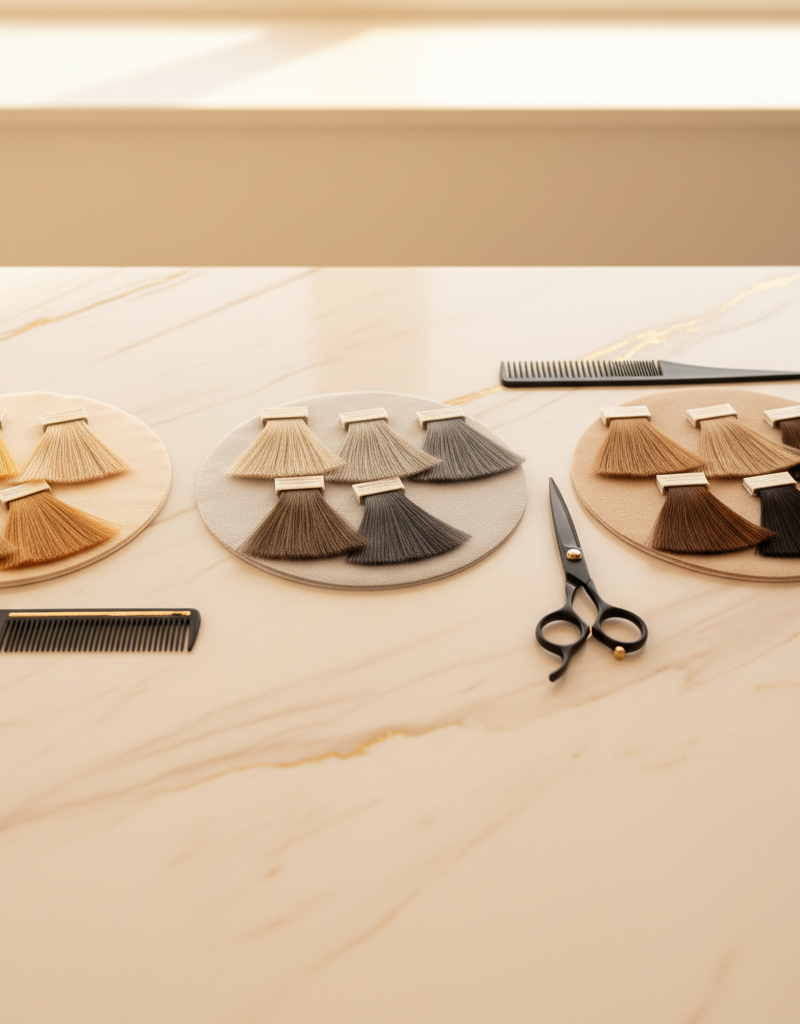
How many times have you scrolled Instagram thinking “I want that color” without knowing if it would actually suit you?
Choosing what hair color suits you isn’t about taste — it’s about colorimetry. Your skin tone, undertone (warm, cool, or neutral), and the natural contrast between your skin, eyes, and hair determine which colors flatter you and which wash you out.
This guide covers the quick fundamentals. For a personalized answer, try our free color analysis quiz — 9 questions and in 3 minutes you’ll know your color season and the shades that work for you.
Quick summary: The best hair color for you depends on three factors: skin undertone (warm = golds and coppers, cool = ashes and platinums), natural contrast between skin and eyes, and your natural hair level. Colors within 2 levels of your natural are always the safest and most flattering choice.
What are the 3 factors that determine what hair color suits you?
Three variables determine visual harmony between hair and face: skin undertone (warm, cool, or neutral), natural contrast between skin, eyes, and hair, and the natural hair level which determines how much lift or depth is safe without damage.
1. Skin undertone
Undertone is what decides whether golds or ashes flatter you:
| Undertone | How to identify | Hair colors that flatter |
|---|---|---|
| Warm | Green-ish veins, gold jewelry looks better | Copper, golden, honey, caramel, warm brown |
| Cool | Blue/purple veins, silver jewelry looks better | Ash, platinum, cool brown, blue-black |
| Neutral | Mix of both, gold and silver both work | Nearly anything — adjust based on contrast |
2. Natural contrast
Contrast is the difference between your skin tone and your hair/eye color:
- High contrast (light skin + dark hair/eyes): You can go extreme — very light blondes or intense blacks
- Low contrast (everything similar in tonality): Better with subtle changes, 1-2 levels from natural
- Medium contrast: Maximum flexibility — most colors work
3. Natural hair level
Your natural level (from 1 black to 10 extra light blonde) determines how much you can lighten or darken safely:
- Lightening more than 3-4 levels requires professional bleaching
- Going darker is technically simpler but affects contrast
- Within 2 levels of natural is the safest and most flattering change
What hair colors work best for each skin tone?
Skin tone paired with undertone determines flattering choices. Very fair with cool undertone suits ash blonde, cool brown, and blue-black. Dark skin with warm undertone suits mahogany, deep copper, and dark caramel. Medium (olive) skin with neutral undertone suits chocolate brown, mocha, and dark honey. When in doubt, always choose the shade closest to your natural level.
| Skin tone | Undertone | Flattering colors | Colors to avoid |
|---|---|---|---|
| Very fair | Cool | Ash blonde, cool brown, blue-black | Intense gold, copper |
| Very fair | Warm | Honey blonde, strawberry, golden brown | Ash, pure platinum |
| Light-medium | Cool | Cool brown, champagne blonde, ash | Caramel, warm coppers |
| Light-medium | Warm | Caramel, copper, golden blonde | Blue-black, cool ash |
| Medium (olive) | Neutral | Chocolate brown, mocha, dark honey | Very light ash, Nordic blonde |
| Dark | Warm | Mahogany, deep copper, dark caramel | Light ash, platinum |
| Dark | Cool | Intense black, aubergine, burgundy | Light gold, honey blonde |
Pro tip: If you’re torn between two shades, always choose the one closer to your natural level. Subtle changes look best and are easiest to maintain.
How do you identify your skin undertone at home?
You can identify your undertone in under two minutes without a colorist. Look at the veins on the inside of your wrist under natural light: greenish veins mean warm undertone, blue or purple veins mean cool undertone, and a mix of both means neutral undertone. A second method: hold a piece of gold paper and a piece of silver paper next to your face — whichever makes your skin look more radiant corresponds to your undertone.
The vein method
The fastest and most reliable at-home test:
- Green or greenish veins: warm undertone. Golds, coppers, and earthy tones suit you.
- Blue or purple veins: cool undertone. Ashes, platinums, and cool tones suit you.
- Mix of green and blue: neutral undertone. You have the most flexibility of all.
The jewelry method
Hold a gold necklace or bracelet near your face, then a silver one. The metal that makes your skin look more luminous and healthy corresponds to your undertone. Gold = warm. Silver = cool. Both equal = neutral.
The sun reaction method
Think about how your skin reacts to unprotected sun exposure. Warm-undertone skin tends to tan easily and rarely burns. Cool-undertone skin tends to go red first and tan less easily.
Pro tip: Always assess undertone under natural light, never under the warm lighting of a bathroom or salon. That light distorts skin tones and can lead you to misidentify your undertone.
What are the most common mistakes when choosing hair color?
The most frequent mistake is choosing a color based on trends or how it looks on someone else, without considering your own undertone or natural level. Other common errors include ignoring your natural contrast, lifting too many levels at once, and not consulting your colorist about the feasibility of your goal before starting.
Mistake 1: Choosing by trend without considering undertone
Ash blonde can be spectacular on someone with a cool undertone and unflattering on someone with a warm undertone. The color you see in an Instagram photo exists on a person with a specific undertone, contrast, and natural level — which may be completely different from yours.
Mistake 2: Ignoring your starting level
Wanting to go from level 3 to level 9 in one session is a recipe for hair damage. Each level of lift requires peroxide, and going more than 3-4 levels in a single session irreversibly compromises hair fiber integrity. A good colorist will spread the process across multiple sessions.
Mistake 3: Confusing “I love that color” with “that color suits me”
A color can be beautiful on its own but still wash out your face. The goal isn’t to wear the most attractive color in the catalogue — it’s to wear the color that makes your skin look more luminous, your eyes more vivid, and your overall look more harmonious.
Mistake 4: Not previewing before a major change
For big color changes, always ask your colorist to do a test strand or use a color simulator before committing. Changing your mind after bleaching is expensive — both for your wallet and your hair.
| Common mistake | Consequence | Solution |
|---|---|---|
| Choosing by trend | Color that washes out skin | Check undertone first |
| Lifting too much at once | Irreversible hair damage | Progressive process (multiple sessions) |
| Ignoring contrast | Unflattering result | Use the contrast framework |
| Not previewing | Costly regret | Simulator or test strand |
How can you find out exactly what hair color suits you?
The 9-question color analysis quiz determines your color season (spring, summer, autumn, or winter) and generates a personalized palette with the hair colors that flatter your exact undertone, contrast, and natural level. The result includes recommended colors with their professional level and reflect, plus colors to avoid and why.
The table above is general guidance. For a personalized result that considers your exact undertone, contrast, and natural level, we’ve created a colorimetry quiz based on the 12-season color system.
Take the free color analysis quiz →
9 questions · 3 minutes · Instant result including:
- Your color season (spring, summer, autumn, or winter)
- Clothing color palette that flatters you
- Recommended hair colors with professional level and reflect
- Hair colors to avoid and why
Frequently asked questions
Can I dye my hair any color regardless of my skin tone?
Technically yes, but not every color will flatter you equally. A color that doesn’t harmonize with your undertone can make skin look dull, flushed, or sallow. Professional colorists adjust the dye’s reflect to compensate.
Does eye color affect what hair color suits me?
Yes, because it affects overall contrast. Light eyes with dark hair create high contrast (dramatic). Eyes and hair of similar tones create low contrast (soft, natural). Both can look great if the undertone is correct.
What if I’m neutral and “everything suits me”?
If your undertone is neutral, you have maximum flexibility. The key is contrast: if you have high natural contrast, you can go for intense colors. If you have low contrast, medium and soft tones are your safe zone.
Does skin undertone change over time?
Undertone is permanent — it is a genetic characteristic that doesn’t change with tanning, age, or seasons. What does change is the surface tone (lighter in winter, darker in summer), but the underlying undertone remains stable throughout your life. This means the colors that suit you now will be the same ones that suit you in 10 years.
Does dyed hair affect what colors suit me?
Dyed hair can alter perceived contrast, but it doesn’t change your undertone. If you’ve had the same color for years and want to know your “best color,” the most reliable approach is to assess your skin undertone and eye contrast, not the current hair color. An experienced colorist can do this analysis without needing to know your natural color.
Key takeaways
- Undertone: Determines whether warm (golds, coppers) or cool (ashes, platinums) suit you
- Contrast: Defines how far you can go from your natural level
- Safest bet: Always within 2 levels of natural with the correct undertone — use our hair color level guide (1 to 10) if you need to identify your starting point
Calculate professional formulas with AI
Already know what color suits you and want the full formula? Blendsor generates custom formulas with level, reflect, and ratio.
Formulate with Blendsor — a second opinion that reads each client’s real hair condition and remembers it next time.
Related articles


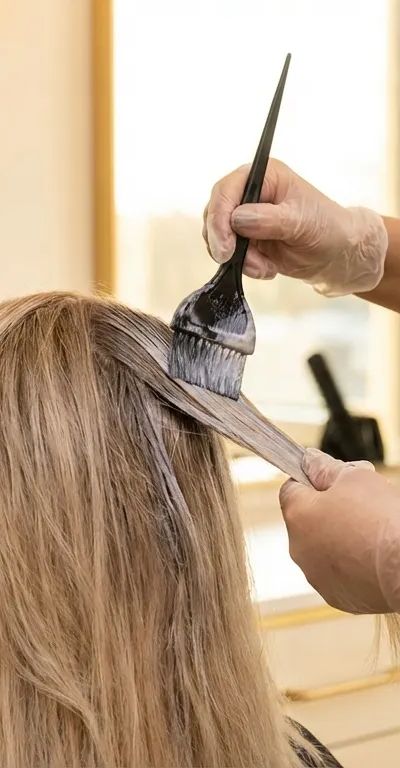

Practice with our colorimetry tools
Calculators, neutralization wheel, AI consultation...
The Blendsor newsletter
Color techniques and trends for professionals. No spam.
You know the theory. What about today's case?
Send a photo to the Blendsor advisor and get an answer grounded in colour theory: toner, developer and timing, with the brands on your shelf.
Ask about your caseWritten by the Blendsor team
Professional hair colorimetry experts with experience in AI-assisted formulation. We combine color science, salon practice and technology to help colorists formulate with precision.