Warm Honey Blonde: Professional Formulas by Starting Level
Learn how to formulate warm honey blonde by starting level. Professional formulas, differences from other blondes, and common mistakes to avoid.
Blendsor
Blendsor Team
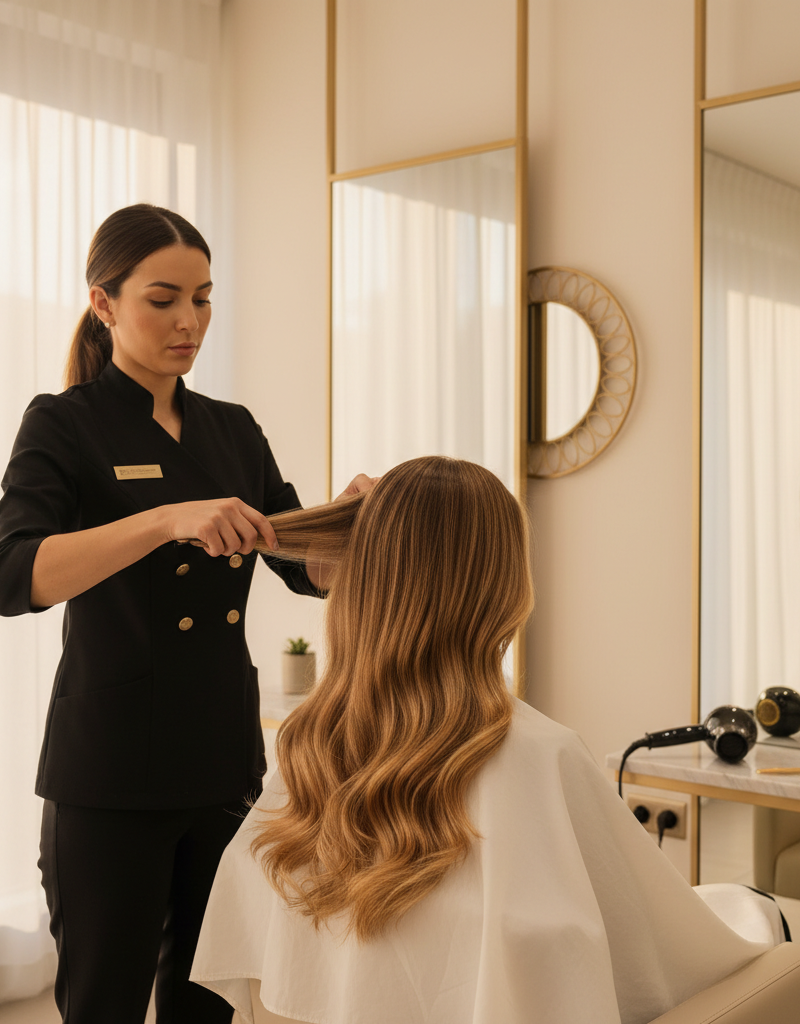
Does your client want a blonde that looks natural, luminous, and warm — without tipping into brassy yellow?
If you’re a professional colorist, this request lands in your chair every week. And while it sounds simple, achieving a perfect warm honey blonde requires understanding exactly what sets it apart from other warm blondes and how to formulate it based on starting level.
In this article you’ll learn what defines this tone, the professional formulas by level, and the mistakes that turn a gorgeous honey blonde into a flat, lifeless yellow.
Quick summary: Warm honey blonde is a level 7-8 tone with golden-caramel undertones that flatters all skin tones. According to the Professional Beauty Association, warm blondes now account for 62% of salon blonde requests in 2026, surpassing cool blondes for the first time in five years. The key formula is gold (G) + natural (N) + copper touch (C), with developer volume adjusted by starting level. Maintenance interval: 6-8 weeks.
What Is Warm Honey Blonde and Why Does It Work on Every Client?
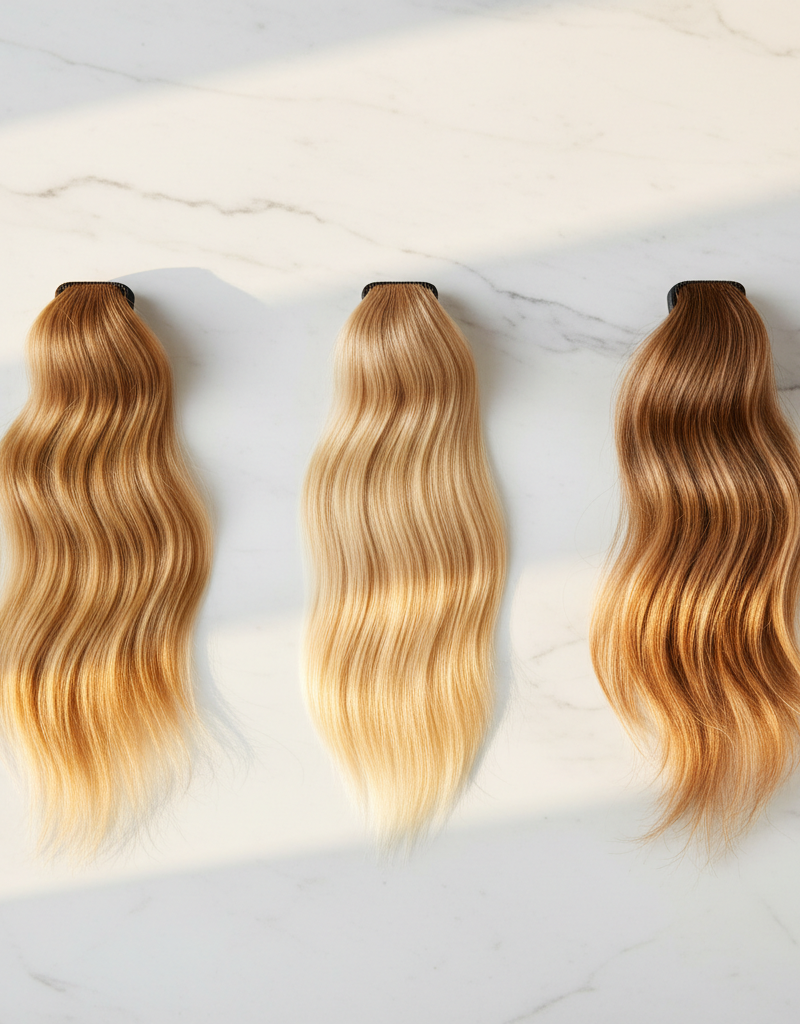
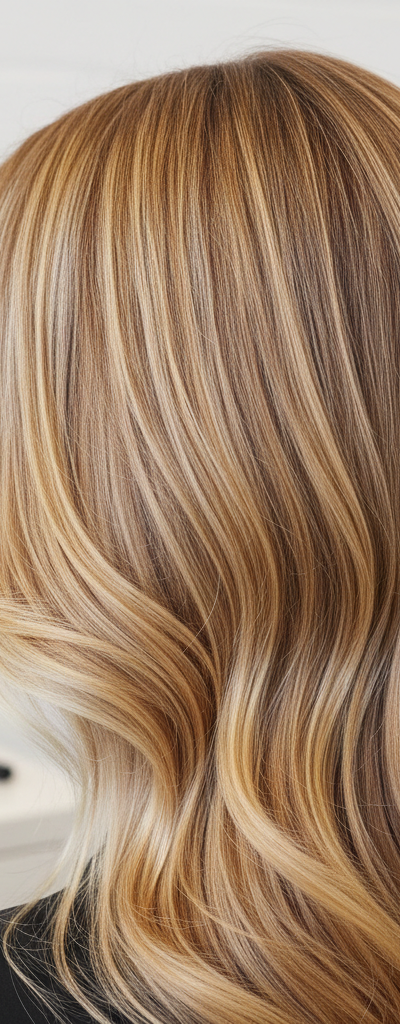
Warm honey blonde is a blonde between level 7 and 8 with golden-caramel undertones that evoke the color of natural honey. It has depth, controlled warmth, and the kind of luminosity that makes hair look healthy. According to the Professional Beauty Association, warm blondes account for 62% of salon blonde requests in 2026, surpassing cool blondes for the first time in five years because they flatter more skin tones and require less maintenance between appointments.
Warm honey blonde is a blonde between level 7 and 8 with golden and caramel undertones reminiscent of natural honey. It’s not a flat blonde or a saturated gold — it has depth, controlled warmth, and the kind of luminosity that makes hair look healthy and natural.
According to the Professional Beauty Association, warm blondes now account for 62% of salon blonde requests, surpassing cool blondes for the first time in five years. The reason is practical: honey blonde flatters more skin tones, requires less maintenance, and ages better between appointments than any ash blonde.
This shade fits within the 2026 hair color trends as the most versatile warm blonde in demand, sitting halfway between Teddy Bear Blonde (more golden) and caramel (darker). Clients who want something more neutral and creamy often end up choosing cashmere blonde instead.
| Feature | Warm Honey Blonde | Golden Blonde | Caramel Blonde | Teddy Bear Blonde |
|---|---|---|---|---|
| Target level | 7-8 | 8-9 | 6-7 | 7-9 |
| Dominant undertone | Golden-caramel | Pure gold | Copper-gold | Gold-honey |
| Warmth | Medium | High | High | Medium-high |
| Maintenance | Low (6-8 wks) | Medium (5-6 wks) | Low (6-8 wks) | Low (6-8 wks) |
| Skin tones | All | Warm | Warm-neutral | Warm-neutral |
| Saturation | Soft | Intense | Medium | Soft |
How Do You Formulate Warm Honey Blonde by Starting Level?
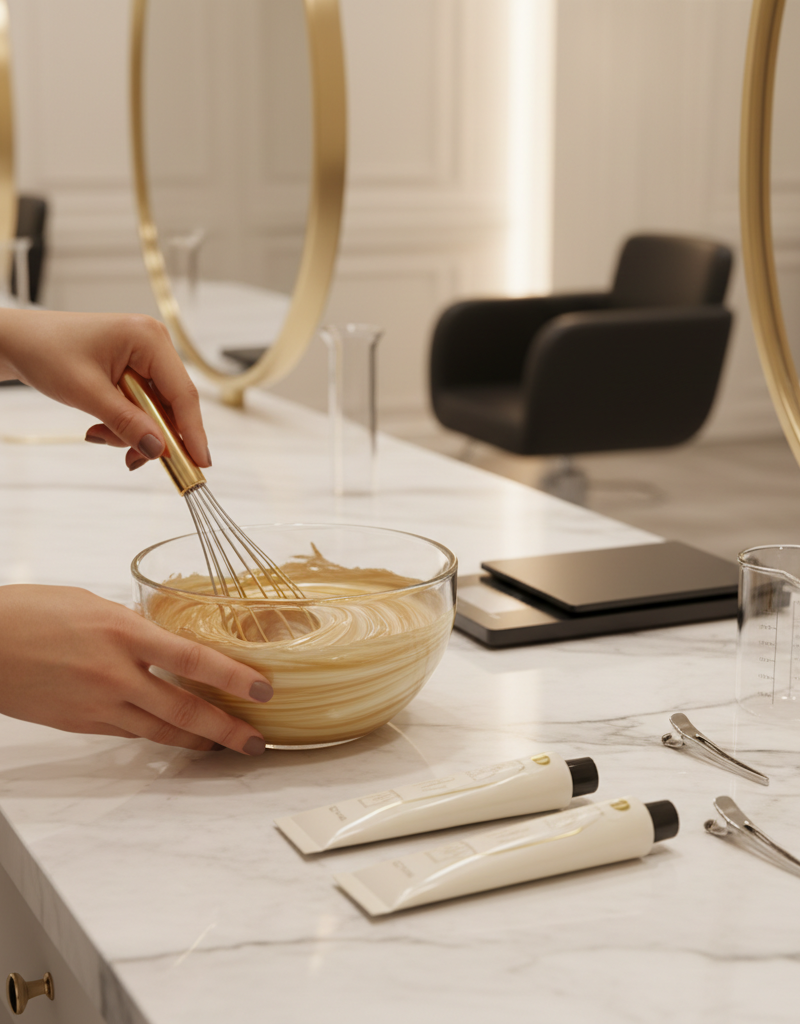
Honey blonde is formulated differently depending on starting level: level 5 requires lightening with 20 vol to an orange-yellow underlying pigment before toning; level 6 accepts direct colour with an 8G+7N+8C mix; level 7 needs toning only with 10 vol; level 8+ uses a gloss with 5-10 vol plus a drop of gold concentrate (.3). Every formula combines gold + natural series to control saturation.
The key to honey blonde is achieving the golden-caramel undertone without going too yellow or too coppery. The trick is adapting the formula to your client’s natural level.
Level 5: Light brown
The most demanding starting point. You need to lift 2-3 levels and deposit the warm tone without the orange undertone dominating the result.
Base formula: Controlled lightening with 20 vol developer to an orange-yellow underlying pigment (level 7), followed by toning with a gold + soft copper mix.
| Step | Product | Ratio | Time |
|---|---|---|---|
| Lightening | Lightener + 20 vol | 1:2 | 25-35 min |
| Toning | 8G + 8C + 7N | 2:1:0.5 | 15-20 min |
Pro tip: At level 5, never jump straight to a high-gold tint. The orange underlying pigment adds to the gold in the tint, and the result is dirty yellow. Lighten first, tone second.
Level 6: Dark blonde
The most rewarding level for honey blonde. The golden-orange underlying pigment already contributes part of the warmth you’re looking for.
Base formula: Direct colour with 20 vol developer. The mix of gold and natural tones controls saturation.
| Step | Product | Ratio | Time |
|---|---|---|---|
| Direct colour | 8G + 7N + 8C | 2:1:0.5 | 30-35 min |
| Alternative | 7G + 8G | 1:1 + 20 vol | 30-35 min |
Level 7: Medium blonde
Here you only need to deposit tone, not lift. This is the ideal level for a blonde balayage with a natural honey result.
Base formula: Semi-permanent or demi-permanent tint with low-volume developer.
| Step | Product | Ratio | Time |
|---|---|---|---|
| Toning | 8G + 9N | 2:1 + 10 vol | 20 min |
| Honey gloss | 9G + clear | 1:1 + 5 vol | 10-15 min |
Level 8: Light blonde
The challenge is not losing warmth. A level 8 tends to look washed out if you don’t deposit enough gold tone.
| Step | Product | Ratio | Time |
|---|---|---|---|
| Toning | 9G + 8G | 1:1 + 10 vol | 15-20 min |
| Extra warmth | Add a drop of .3 (gold) | Minimal | - |
Pro tip: At levels 8+, a single drop of gold concentrate (.3) in the mix makes all the difference between a vibrant honey blonde and a flat neutral blonde with no personality.
What Role Does Developer Play in Honey Blonde?
Developer volume determines the result as much as the tonal mix: level 5 (lightening) uses 20 vol to lift without excess heat; level 6 (direct colour) uses 20 vol to lift 1-2 levels and deposit; level 7 (toning) uses 10 vol to deposit tone only; level 8+ (gloss) uses 5-10 vol without altering the level. The lighter the starting level, the lower the volume needed.
Choosing the right developer volume is just as important as the tonal mix. A volume error can turn your honey blonde into straw yellow.
| Starting level | Recommended developer | Reason |
|---|---|---|
| 5 (lightening) | 20 vol | Lifts without excess heat |
| 6 (direct colour) | 20 vol | Lifts 1-2 levels + deposits |
| 7 (toning) | 10 vol | Deposits tone only |
| 8+ (gloss) | 5-10 vol | Deposits without altering level |
Golden rule: The lighter the starting level, the less volume you need. At levels 7-8, use 10 volume or less to preserve hair integrity and ensure the tone deposits cleanly.
What Are the Most Common Mistakes When Formulating Warm Honey Blonde?
The five most common mistakes are: using only gold series (G) without a natural base (produces saturated yellow, not honey), using 30 vol developer to tone a level 7 (lifts the underlying pigment and destroys the warm undertone), neutralizing the orange underlying pigment with ash at level 5-6 (that orange is your warmth ally, not your enemy), skipping the strand test on porous hair (it absorbs more gold and can turn excessively warm), and applying permanent colour directly over the lightened base without a separate toning step.
After reviewing hundreds of colorist formulas on Blendsor, these are the most repeated errors:
-
Using only gold tone without a natural base: Pure gold series (G) without a natural base results in saturated yellow, not honey. Always mix with natural (N) to control saturation.
-
Developer volume too high for toning: Using 30 vol to tone a level 7 lifts the underlying pigment and loses the warm undertone you worked so hard to achieve. For toning only, 10 volume maximum.
-
Ignoring the underlying pigment: At level 5-6, the orange undertone is your ally, not your enemy. Don’t neutralize it with ash — work it into the formula as a warmth base.
-
Skipping the strand test: Honey blonde depends heavily on porosity. Porous hair absorbs more gold and can turn excessively warm. Always test first.
-
Skipping toning after lightening: Lightening and applying permanent colour directly over the orange underlying pigment gives unpredictable results. Always tone in a second step.
How Do You Maintain Honey Blonde Between Appointments?
Honey blonde requires very little maintenance: unlike cool blondes that need toner every 3-4 weeks, honey blonde ages naturally because the warm root gradually blends into the tone. The at-home routine includes sulphate-free shampoo, a gold-pigmented mask every 7-10 days, heat protection before any heat styling, and a return appointment at 6-8 weeks for root touch-up and ends refresh.
A major advantage of honey blonde is low maintenance. Unlike cool blondes that need toner every 3-4 weeks, honey blonde ages naturally because the warm root gradually blends into the tone.
Recommend to your client:
- Sulphate-free shampoo to preserve tone
- Gold-pigmented mask every 7-10 days
- Heat protection always before straightening or blow-drying
- Next appointment: 6-8 weeks (root only + ends refresh)
Frequently asked questions
Does warm honey blonde suit cool skin tones?
Yes, and this is its biggest advantage over other warm blondes. Honey blonde has controlled warmth (not intense like pure gold), allowing it to work on cool skin tones without creating harsh contrast. The key is keeping saturation low and adding more natural base to the formula.
Can I achieve honey blonde without lightening?
It depends on the starting level. From level 6 and above, yes: a permanent tint with 20 vol gets the result. From level 5 or below, you need prior lightening to an orange-yellow underlying pigment, then tone with the honey mix.
How long does warm honey blonde last?
Between 6 and 8 weeks with proper care. It’s one of the longest-lasting blondes because the natural fade doesn’t create harsh lines — the root gradually blends with the honey tone, producing a flattering shadow root effect.
What’s the difference between honey blonde and Teddy Bear Blonde?
Teddy Bear Blonde has a wider range (levels 7-9) and allows more undertone variations (golden, butter, caramel). Honey blonde is one variant within that family, with a specifically golden-caramel undertone concentrated at levels 7-8.
In summary
- Warm honey blonde is a level 7-8 tone with golden-caramel undertones that flatters all skin tones
- Key formula: Mix gold (G) + natural (N) + touch of copper (C), adjusting ratios by starting level
- Main mistake: Using only gold series without natural, producing yellow instead of honey
- Maintenance: 6-8 weeks, one of the easiest blondes to maintain
Calculate honey blonde formulas with AI
Want to preview the result before applying? Use the hair color mixing calculator to see how the golden tones will look over your client’s starting level.
Want to generate custom warm honey blonde formulas based on starting level, porosity, and each client’s colour history?
Related articles
Practice with our colorimetry tools
Calculators, neutralization wheel, AI consultation...
The Blendsor newsletter
Color techniques and trends for professionals. No spam.
A client in the chair right now?
The Blendsor advisor gives you the precise formula for this technique with your salon's brands — and saves it to your client's card.
Ask about your caseWritten by the Blendsor team
Professional hair colorimetry experts with experience in AI-assisted formulation. We combine color science, salon practice and technology to help colorists formulate with precision.