How Salon Temperature Affects Hair Color Results
Salon heat speeds up hair dye processing. Learn to adjust timing based on temperature and keep roots from over-processing for consistent results.
Blendsor
Blendsor Team
Have you ever noticed that in summer, hair color seems to process faster than usual?
You apply the mix as normal, follow the technical data sheet timing, check at 30 minutes — and the development looks like it has been on for 40. Or worse: the roots have already closed while the mid-lengths are still processing.
That is not imagination. It is chemical kinetics. Understanding what salon heat does to the color reaction lets you anticipate the problem rather than correct it after the rinse.
Quick summary: Salon temperature accelerates hair dye kinetics because heat increases the reaction rate of hydrogen peroxide. The correct adjustment in a hot salon is to monitor and reduce processing time — never change the mix ratios. Roots process faster because of scalp heat: if you’re only depositing tone at the root, you can lower the developer volume at the root only; if you’re covering grey or lifting a virgin root, 20 vol is the floor and the adjustment is timing.
Why Does Salon Heat Speed Up Hair Dye Processing?
Ambient heat accelerates the color reaction because it raises the kinetic energy of the molecules involved. At higher temperatures, hydrogen peroxide decomposes faster, cuticle opening is more intense, and dye precursors polymerize in less time. The result: the same color, with the same data sheet timing, processes more quickly in a salon at 30°C (86°F) than in one at 19°C (66°F).
This is a direct manifestation of the Arrhenius equation, which cosmetic chemistry applies to the stability of cosmetic formulations: for every 10°C rise in temperature, the reaction rate of many chemical processes approximately doubles.
In practical salon terms, this produces two concrete effects:
- Overall processing is faster. The 30–35-minute data sheet timing assumes a lab or climate-controlled salon environment (around 20°C / 68°F). Above roughly 25°C (77°F), that window shrinks.
- The root zone processes faster than the rest. The scalp generates constant body heat. This was always true in winter, but in summer the ambient heat amplifies the temperature gap between roots and mid-lengths or ends.
Consider a client with a level 5 base, 40% gray, and a standard coverage formula on 20 vol. In January with the salon at 20°C (68°F), you have a comfortable working window of 30–35 minutes. In August with the salon at 29°C (84°F) and no air conditioning, that window narrows. Development can be complete between 22 and 25 minutes. If you are not watching closely, the color has already closed — and the final result is darker than intended, especially at the roots.
How to Adjust Processing Time When the Salon Is Hot
When the salon is warm, the correct adjustment is to monitor and reduce processing time. The mix ratio and the developer volume for the length are not changed.
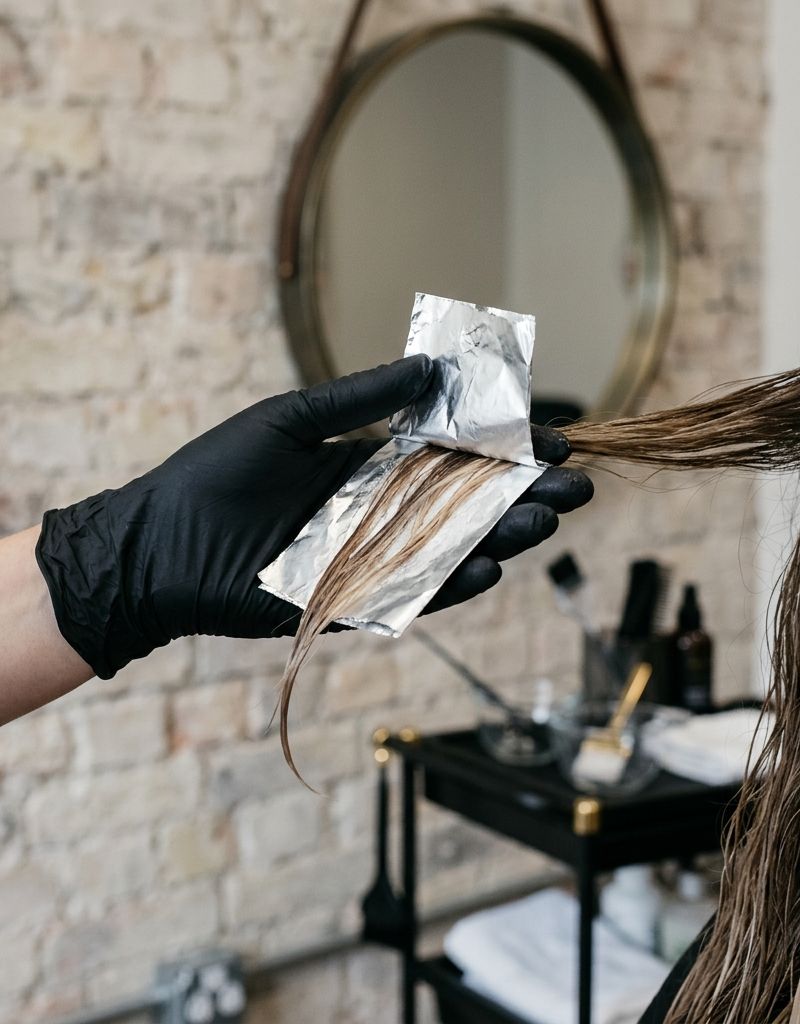
The hair color processing time guide covers the baseline timing by process type. When salon temperature exceeds 25°C (77°F), apply these indicative adjustments:
| Process | Baseline time (~20°C / 68°F) | Adjustment in hot salon (>25°C / 77°F) | Control signal |
|---|---|---|---|
| Standard permanent color | 30–35 min | Start checking at 22–25 min | Strand test every 5 min |
| Gray coverage (maximum resistance) | 45 min | 35–40 min in high-heat conditions | Check coverage in gray zone |
| Demi / semi-permanent color | 20–30 min | 15–22 min | Visual check at 15 min |
| Acid gloss / toner | 5–20 min (manufacturer-dependent) | Monitor from 5 min | Based on desired intensity |
Three rules for hot days:
- Start the timer when you apply the first section, not when you finish. When temperatures are high, the reaction starts from the very first second of application. Do not wait until the full head is covered to activate the clock.
- Do the strand test proactively. In summer this is not optional — it is the most reliable control mechanism to avoid under- or over-processing.
- Record the ambient temperature alongside the formula. If you use Blendsor to log your formulas, note whether the service was carried out in high-heat conditions. At that client’s next appointment, you will have a real data point, not a guess.
Professional tip: If the salon has air conditioning and you keep it between 20–22°C (68–72°F), data sheet timings apply without adjustment. The issue arises when ambient temperature rises above 25°C (77°F), particularly in spaces without climate control or with strong direct sunlight.
What Happens at the Roots When It Is Hot?
Roots always process faster than mid-lengths and ends. This is not a summer-only issue: the scalp emits constant body heat — surface skin temperature sits between 34–36°C (93–97°F). That means the root zone always has a warmer environment than the mid-lengths and ends, where there is no body heat source.
Two phenomena tend to get lumped together here, and they are worth separating:
- Scalp heat speeds up processing at the root. That is what this article is about: the same mix develops faster in the root zone. You manage it with timing, strand tests and — only when the root is deposit — volume.
- Hot roots — a root that ends up lighter or warmer than the mid-lengths — are a zone formulation error, not a temperature problem. They happen when you apply a formula designed for the lengths onto virgin regrowth: that root, with no accumulated damage, lifts more and exposes warmth the mid-lengths no longer show. Scalp heat accelerates processing, but it is not what turns the root orange — the formula does that. The fix is reformulating the root zone or, in lightening services, changing the application order (the virgin root lifts fastest and goes last) — not lowering the developer. Wella’s guide on hot roots points the same way: product choice, application order and no-lift toning.
For the first phenomenon — the genuinely thermal one — standard practice is to treat the root zone separately from the rest: the same zone-by-zone diagnosis you already run on any retouch. What sets the volume in that zone isn’t the heat: it’s your objective there.
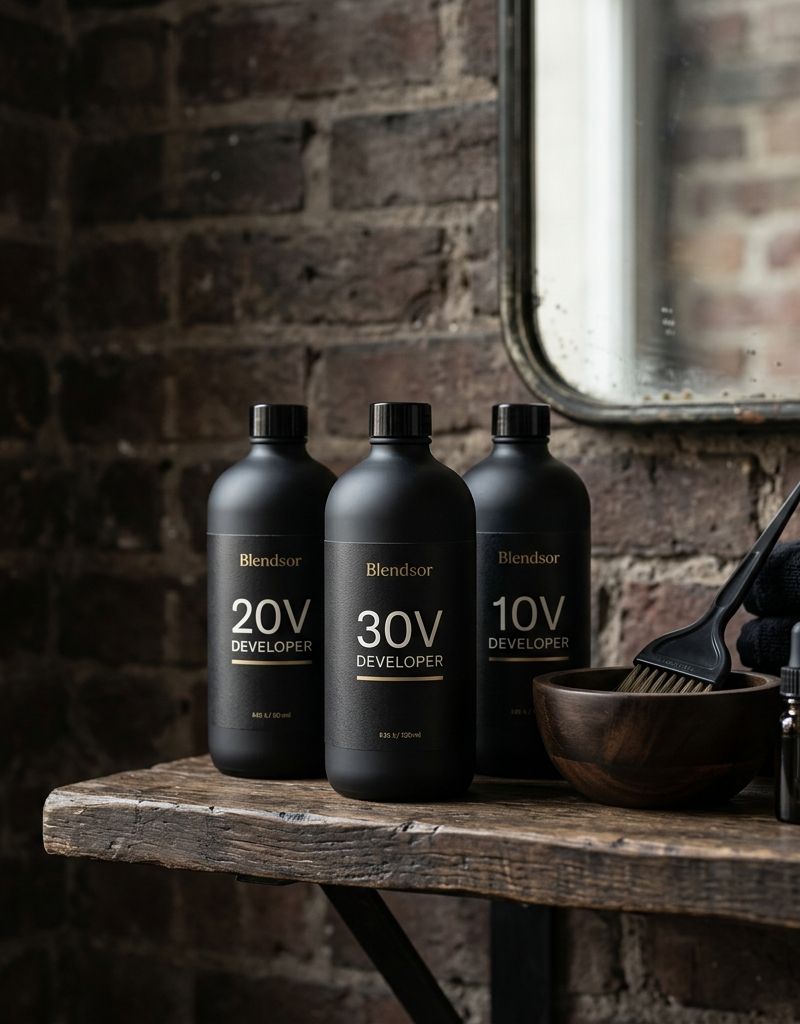
In practice this works as follows:
- Mid-lengths and ends: 20 vol (6% H₂O₂) → standard reaction speed.
- Root zone (first 2–3 cm): the volume is set by your objective in that zone, not by the heat. If you’re only depositing tone on tone at the root, with no level change, 10 vol (3% H₂O₂) reacts more slowly and offsets the extra heat from the scalp. If there’s grey to cover or a natural base to lift, 20 vol is the floor: below that you get neither coverage nor real lift, and heat doesn’t move that minimum.
When the root is deposit and you drop to 10 vol, both zones complete development in a similar timeframe and you avoid over-processed roots. When the root runs at 20 vol because there’s grey or a natural base, volume won’t buy you that evening-out: the root will run ahead, and that’s its normal pace — it needs the full development for the grey to close. There, your control is the strand test, checking the root before the mid-lengths.
What you do not do is change the mix ratio. The hair dye mixing ratios — the color-to-developer ratio, typically 1:1 or 1:1.5 — are a formulation parameter and are not adjusted to compensate for temperature. Altering that ratio changes the consistency of the mix, the coverage capacity, and the correct activation of the dye precursors. The adjustment variable for temperature at the root zone is always the volume, not the ratio.
Careful about turning this into a fixed rule. Dropping to 10 vol at the root is only right when your objective there is pure deposit: tone on tone, with no level change. On a virgin root or with grey to cover, 10 vol leaves you with an uncovered root and a visible step against the mid-lengths. There, heat is handled with timing, not volume.
One more precision about the root zone itself: the 2–3 cm are not a constant. Beyond roughly 3 cm of virgin regrowth there are two zones within the root — the one against the scalp (warm) and the one further away (cool) — and they process at different speeds. In that case, apply the section furthest from the scalp first and work into the scalp area last, so both finish together.
For a full breakdown of the logic behind developer volumes and when to use each one, see the professional developer volumes guide.
Is There a Difference Between a Hot Salon and a Hood Dryer or Climazon?
Yes — and it is important not to conflate the two contexts because the mechanism of action is different.
Ambient salon heat acts on the entire mix uniformly: the bowl, the hair, and the scalp all receive the same ambient temperature. The acceleration is gradual and relatively even across the whole fiber.
A hood dryer or climazon delivers heat in a controlled and direct way. The acceleration is deliberate and forms part of the technique. Timing under an applied heat source shortens more sharply and predictably than with ambient heat alone:
| Heat source | Type of effect | Typical adjustment |
|---|---|---|
| Ambient heat >25°C (77°F) | Diffuse, across the whole mix | Reduce time by 5–10 min, monitor from earlier |
| Hood dryer / climazon | Direct and controlled | Process-specific timings (15–25 min depending on service) |
| Scalp (body heat) | Localised at root zone | Lower the volume only if that zone is deposit; with grey or a virgin root, 20 vol and adjust timing |
A common mistake is combining both: using a hood dryer in an already-warm salon without recalculating the timing. If the salon is at 27°C (80°F) and you also apply a climazon, the acceleration is cumulative. In that scenario, active strand testing every 5–8 minutes is non-negotiable.
Checklist: 4 Things to Check Before Applying on a Hot Day
Before mixing and applying when the salon is warm, run through these four points:
-
Salon temperature. Is it above 25°C (77°F)? If so, activate the reduced-timing protocol. If you have climate control, verify the thermostat is set between 20–22°C (68–72°F) before starting.
-
Developer volume at the root zone. Decide by zone objective before you mix: if you’re only depositing tone at the root, 10 vol over the first 2–3 cm reins in the extra processing from scalp heat. If there’s grey to cover or a natural base to lift, hold at 20 vol and manage the heat with timing and the strand test. Diagnose each zone separately, as in the guide to developer volume on porous hair.
-
Timer from the first section. On hot days, timing starts the moment you apply the mix — not when you finish. Adjust your routine: activate the timer when applying the first section, not the last.
-
Scheduled strand test. Do not wait for the timer to run out. In the heat, the first check should happen 8–10 minutes before your usual endpoint. If development is at the optimal point, rinse immediately.
Frequently Asked Questions
Does Salon Temperature Affect All Types of Hair Color Equally?
Not exactly. The effect is most pronounced in permanent color with developer, where the H₂O₂ reaction is heat-sensitive. Demi- and semi-permanent colors are also affected, though less intensely because they work with low volumes or no peroxide. Acidic products such as gloss have such short processing times that temperature variation is practically negligible when actively monitored.
Do I Need to Adjust the Timing If I Use a Hood Dryer or Climazon?
Yes. Hood dryers and climazons already have their own, shorter application timings compared to standard room-temperature processing. If the salon is also hot, the acceleration compounds. In that scenario, active monitoring with a strand test is essential. Do not apply data sheet timings designed for ambient-temperature use when working with a heat source in an environment above 25°C (77°F).
Why Do Roots Usually Process Faster Than Mid-Lengths and Ends?
Because the scalp emits constant body heat — surface skin temperature sits between 34–36°C (93–97°F). That means the root zone always has a warmer environment than the mid-lengths and ends, where there is no body heat source. In summer, ambient heat adds to that difference rather than balancing it, which amplifies the effect. The solution depends on your objective at the root: if you’re only depositing tone, a lower volume in that zone; if you’re covering grey or lifting a natural base, you hold at 20 vol and control with timing and the strand test.
Does the Temperature of the Rinse Water Affect the Final Color Result?
In practice, rinsing happens after processing is complete, so water temperature does not alter the color that has already developed. What it does affect is cuticle state at the end of the service: cold water helps close the cuticle and seal the pigment, which contributes to longevity and shine. Very hot water during rinsing can encourage cuticle opening and promote pigment loss in the first few hours after the service — particularly on porous hair.
In Summary
- Salon heat accelerates hair dye kinetics. Above roughly 25°C (77°F), data sheet timings shorten: start checking development 5–10 minutes earlier than usual.
- The adjustment variable in a hot salon is always time — never the mix ratios.
- When the root is processing faster from body heat, lower the developer volume at the root zone only (from 20 vol to 10 vol) only if that zone is deposit with no level change. If there’s grey to cover or a virgin root to lift, 20 vol is the floor and the heat is managed with timing. The color-to-developer ratio never changes.
- Hot roots — a root that ends up lighter or warmer than the mid-lengths — are not a thermal phenomenon: they are a zone formulation error, corrected by reformulating the root, not by lowering the developer.
- Hood dryers or climazons and ambient heat are two separate sources that compound each other. When both are present simultaneously, active monitoring is essential.
- Start the timer when you apply the first section, not when you finish.
Recording the service temperature alongside the formula is not a minor detail — it is what allows you to replicate or correct a result at the next appointment. In Blendsor you can store each client’s complete formula — color, volume, timing, and service notes — so that in summer you are not guessing what changed. The Pro (€19/month) and Studio (€39/month) plans include unlimited formula history and access from any device.
Have you had a service where salon heat gave you an unexpected result? Share it in the comments.
Related articles

Practice with our colorimetry tools
Calculators, neutralization wheel, AI consultation...
The Blendsor newsletter
Color techniques and trends for professionals. No spam.
A client in the chair right now?
The Blendsor advisor gives you the precise formula for this technique with your salon's brands — and saves it to your client's card.
Ask about your caseWritten by the Blendsor team
Professional hair colorimetry experts with experience in AI-assisted formulation. We combine color science, salon practice and technology to help colorists formulate with precision.