Hair Color Business: How to Build a Profitable Salon
Professional guide to building a profitable hair color salon. Pricing, client retention, formula management, and strategies that work.
Blendsor
Blendsor Team
You have the training, you’ve mastered color techniques, and your clients leave the salon happy. But at the end of the month, you look at the numbers and something doesn’t add up. The talent is there, the profitability isn’t.
If you’re a professional colorist who feels your skill isn’t reflected in your income, you’re not alone. Most colorists are so focused on perfecting their technique that they overlook a fundamental piece: the business behind the salon.
In this guide, you’ll discover how to turn your technical ability into a profitable business. From setting prices that reflect your value to retaining clients and managing your formulas efficiently.
Why Hair Coloring Is the Most Profitable Salon Service
Professional hair coloring is by far the highest-margin service in a salon. A haircut depends solely on your time, but coloring combines product, technique, and personalization, which justifies significantly higher prices.
| Service | Average Time | Product Cost | Average Price | Estimated Margin |
|---|---|---|---|---|
| Women’s cut | 45 min | $0-3 | $35-65 | 70-85% |
| Full color (roots) | 60-90 min | $6-15 | $65-100 | 75-85% |
| Highlights/Balayage | 90-150 min | $10-22 | $100-200 | 80-88% |
| Color correction | 120-240 min | $18-35 | $150-300 | 78-88% |
| Gloss/Toner | 30-45 min | $4-10 | $35-60 | 78-85% |
According to the Professional Beauty Association, salons specializing in color generate 30% to 50% more revenue per square foot than generalist salons. Specialization doesn’t just position you as an expert—it improves your bottom line.
Pro tip: Calculate your income per hour, not per service. A $200 balayage in 2.5 hours is $80/hour. A $45 haircut in 45 minutes is $60/hour. The numbers speak for themselves.
The Compounding Effect of Color
What makes coloring truly profitable isn’t a single service—it’s the recurrence. A haircut client comes every 6-8 weeks. A color client returns every 4-6 weeks for root maintenance, toner, or touch-ups. That means:
- More visits per year: 8-13 color visits vs 6-8 haircut visits
- Higher average ticket: Each color visit generates more revenue
- Add-on services: Toner, treatment, cut in the same appointment
- Natural loyalty: Their personalized formula creates positive dependency
Cost Structure: Know Your Numbers
Before setting prices, you need to know exactly how much each service costs you. Many colorists underestimate their real costs because they only think about product.
Direct Costs (Per Service)
| Item | Example: Balayage |
|---|---|
| Product (bleach + toner) | $15-22 |
| Consumables (foil, gloves, clips) | $3-4 |
| Utilities (dryer, flat iron, water) | $1-3 |
| Total direct | $19-29 |
Indirect Costs (Monthly, Prorated)
| Item | Typical Monthly Cost | Per Hour Worked |
|---|---|---|
| Rent | $500-2,000 | $3-12.50 |
| Insurance | $60-200 | $0.40-1.25 |
| Marketing | $60-250 | $0.40-1.55 |
| Continuing education | $60-120 | $0.40-0.75 |
| Software/tools | $25-60 | $0.15-0.40 |
| Total indirect/hour | - | $4.35-16.45 |
Your real cost per hour is direct costs (prorated per hour) plus indirect costs per hour. Only when you know this number can you price with confidence.
For a detailed breakdown with calculation formulas, see our guide to hair coloring service pricing.
How to Set Prices That Reflect Your Value
The most common mistake colorists make is pricing by looking at competitors instead of calculating their true value. Charging the same as the salon next door makes no sense if your training, products, and experience are different.
The Basic Formula
Minimum price = Direct cost + (Indirect cost/hour x Time) + Desired profit
A balayage with the numbers above:
- Direct cost: $22
- Indirect cost (2.5h x $10): $25
- Target profit ($50/hour x 2.5h): $125
- Minimum price: $172 (round to $175)
Factors That Justify Premium Pricing
Not every colorist should charge the same. Your price reflects:
- Specialized training: Advanced colorimetry courses, certifications
- Demonstrable experience: Years of work, portfolio, reviews
- Premium products: Professional high-end brands
- Consistent results: Every client leaves with the exact tone
- Service experience: Personalized consultation, ambiance, attention
Pro tip: If 100% of your clients accept your prices without hesitation, you’re probably undercharging. A healthy ratio is that 10-15% consider your prices high but choose you anyway for quality.
Client Retention: Your Color Client Is Your Greatest Asset
Acquiring a new client costs 5 to 7 times more than retaining an existing one. In a color salon, this is even more critical because each new client involves a unique formula, a color history, and a trust relationship that can’t be easily replicated.

The 5 Strategies That Work
| Strategy | Retention Impact | Effort |
|---|---|---|
| Personalized color consultation | High | Medium |
| Proactive appointment reminders | High | Low |
| Accessible formula history | High | Low (with tools) |
| Color maintenance program | Very high | Medium |
| Post-service communication | Medium | Low |
The key is consistency. It’s not a one-time action—it’s a system. For a deep dive into each strategy with practical examples, read our guide to salon client retention strategies.
The Maintenance Program
The most powerful strategy for retaining color clients is creating a maintenance program. Instead of waiting for the client to call when they already have 3 cm of regrowth, you propose a schedule:
- Week 0: Full color service
- Week 3-4: Maintenance gloss (30 min, reduced price)
- Week 6-8: Root touch-up + toner
- Week 12: Full service again
This program has three advantages: the client keeps their color flawless, your schedule becomes more predictable, and the annual average ticket increases because there are more visits with add-on services.
Formula Management: The System That Makes You Efficient
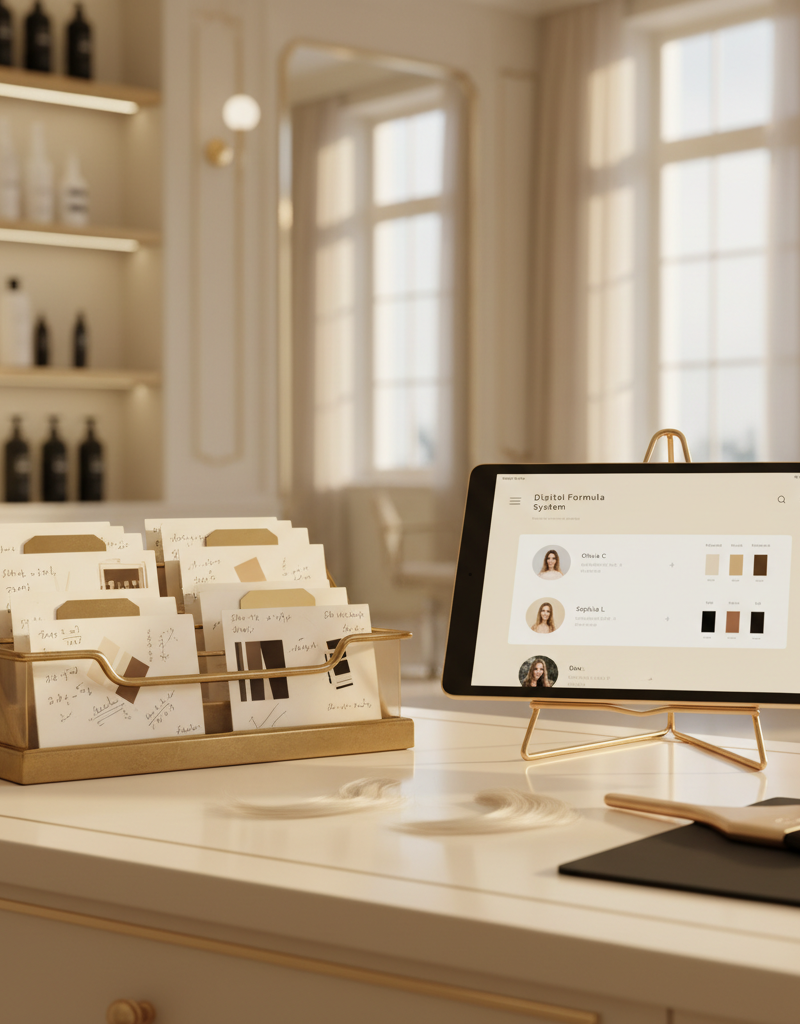
One of the most frustrating problems for a colorist is not finding the formula they used last time with a client. Loose papers, phone notes, lost cards. Every minute searching for a formula is a minute you don’t bill.
What a Good Formula System Needs
| Feature | Notebook | Spreadsheet | Specialized App |
|---|---|---|---|
| Store formulas | Yes | Yes | Yes |
| Search by client | Difficult | Yes | Yes |
| Complete history | Limited | Yes | Yes |
| Result photos | No | No | Yes |
| Mobile access | Yes | Difficult | Yes |
| Auto backup | No | Depends | Yes |
| Lookup time | 2-5 min | 1-2 min | 5-10 sec |
The transition from notebook to a digital system isn’t a luxury—it’s an investment that pays for itself. If you see 8 clients per day and save 3 minutes per formula lookup, that’s 24 minutes daily. Per month, that’s over 8 hours recovered.
For a detailed comparison of methods and tools, see our guide to professional formula management.
Action Plan: First Month to Improve Profitability
You don’t need to change everything at once. Here’s a realistic plan to start seeing results in 30 days:
Week 1: Analyze Your Numbers
- Calculate your real cost per hour (direct + indirect)
- Review your 10 most common services: current price vs actual cost
- Identify services where you lose money or earn too little
Week 2: Adjust Prices
- Apply the minimum price formula to each service
- Communicate changes in advance with transparency
- Prepare your argument: training, products, results
Week 3: Implement a Formula System
- Choose your method (organized notebook, spreadsheet, or app)
- Digitize the formulas for your 20 most frequent clients
- Build the habit of recording every formula after each service
Week 4: Activate Client Retention
- Propose the maintenance program to your 5 best clients
- Set up appointment reminders (manual or with software)
- Ask satisfied clients for reviews (Google, Instagram)
Mistakes That Kill Color Salon Profitability
Even with great technique and happy clients, management mistakes can drain your profitability without you noticing:
-
Not calculating real product cost: Using 80 g of dye when the formula calls for 60 g. Multiplied by 8 clients daily, that’s kilos of product per month.
-
Giving away add-on services: “Let me just put a quick toner on” without charging. If you do it, include it in the base price—but never for free.
-
Not charging for color consultations: A 20-minute consultation where you evaluate the hair, propose options, and plan is a professional service. Include it in the first service charge.
-
Flat pricing for all lengths: A balayage on short hair isn’t the same as on XL. Differentiate your prices by length and density.
-
Constant discounts: Discounts attract price-driven clients, not value-driven ones. A permanent 20% discount is simply a lower price.
According to the International Association of Trichologists, continuing education in advanced colorimetry is one of the factors most correlated with profitability in specialized salons, because it allows offering higher-value services like color corrections and advanced techniques.
Frequently Asked Questions
Is it profitable to open a salon specializing in hair color?
Yes, specializing in color is one of the most profitable options in professional hairdressing. Profit margins per service range from 75% to 88%, and the recurrence of color clients (every 4-6 weeks) generates more predictable revenue than generalist salons.
How much should I invest to start a color salon?
Initial investment varies by model. A chair in a shared salon can start from $3,000-7,000 (product + tools). A small private space requires $20,000-50,000 including renovation, furniture, initial product stock, and three months of financial cushion.
Which coloring service has the highest margin?
Balayage and freehand highlighting techniques typically have the best absolute margin ($100-200 net revenue per service). But in terms of margin per hour, quick glosses and toners ($35-60 in 30 minutes) can be even more efficient when integrated as add-on services.
How often should I review my prices?
At minimum once a year, ideally every six months. Review when product costs increase, you update your training, or demand grows. If you have a consistent waitlist, that’s a clear signal you can raise prices.
Do I need specific software to manage a color salon?
It’s not essential, but highly recommended. A digital system for managing formulas, client histories, and appointments saves 5-10 hours per month and reduces errors. From a well-organized spreadsheet to a specialized app, any step toward digitalization improves efficiency.
Key Takeaways
- Know your numbers: Calculate real cost per hour before setting prices
- Color means recurrence: Every color client generates 8-13 visits per year
- Systematize retention: Maintenance programs, personalized consultations, histories
- Digitize your formulas: Save time, avoid errors, improve the experience
- Review prices regularly: Your value grows with your experience and training
Manage Your Color Salon Smarter
Want to generate personalized formulas for every client, save histories, and optimize your salon time?
Try Blendsor free - 5 formulas per month, no credit card required.
What’s the biggest challenge you face in making your salon profitable?
Articles in this guide
Related articles

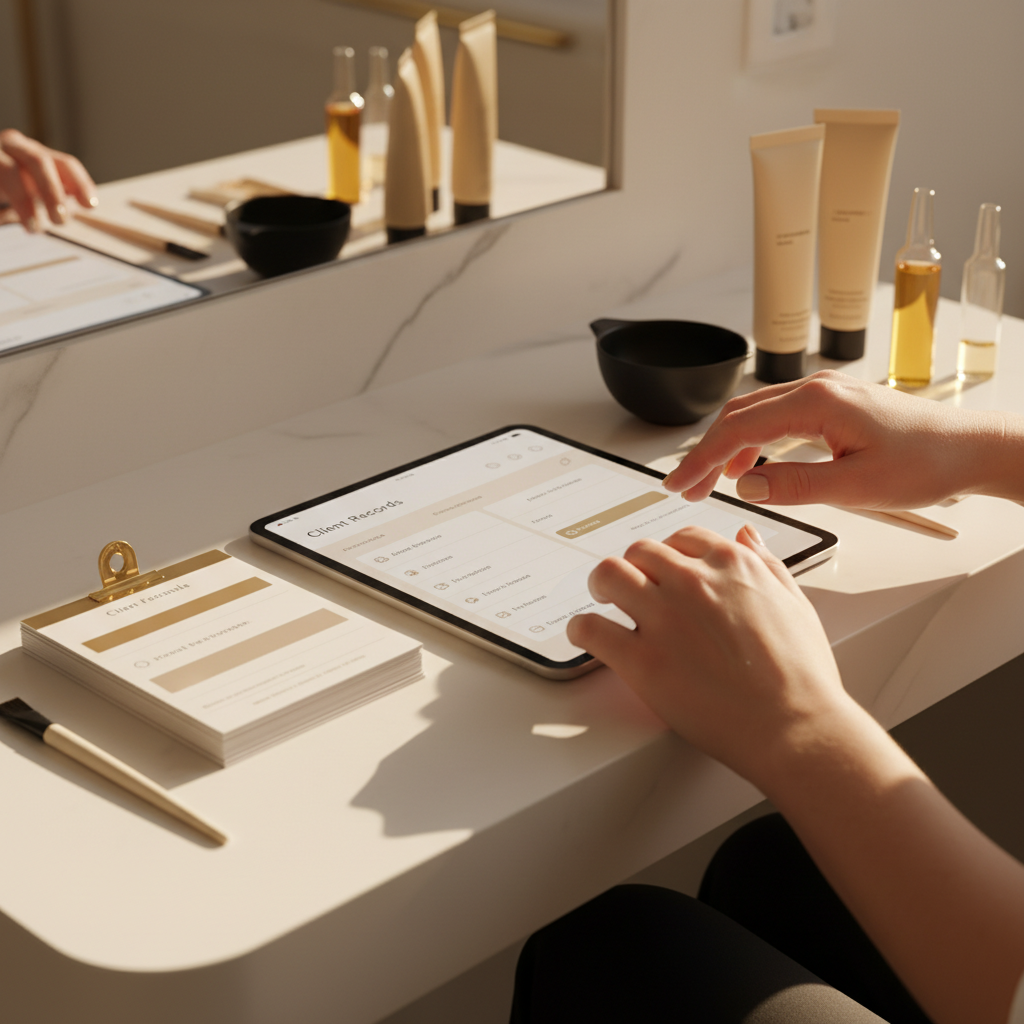
Manage your salon intelligently
Blendsor does more than formulas: organize client files, color history and keep your whole team in sync.
See Blendsor