From Brunette to Blonde: Sessions, Cost, and What to Expect
How many sessions to go from brunette to blonde, what it costs, and how to avoid damage. Honest guide with real numbers and professional advice.
Blendsor
Blendsor Team
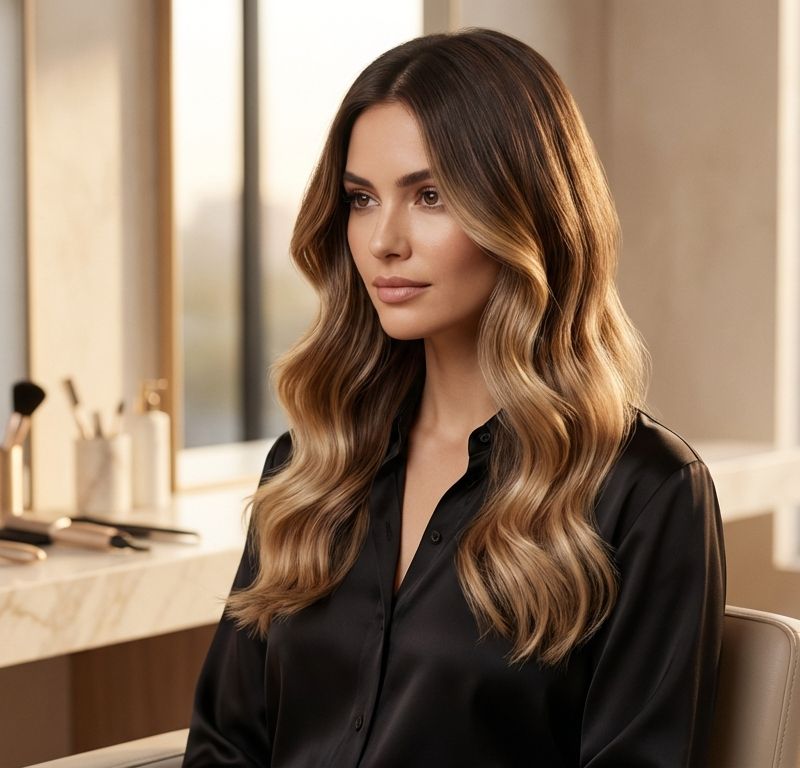
You want to go blonde. You’ve been saving photos of honey blonde, ash blonde, platinum for weeks. And the big question: how many sessions will it take?
The honest answer: it depends on where you’re starting and where you want to end up. Going from light brown to golden blonde (maybe 1 session) is nothing like going from black to platinum (prepare for a long journey).
This guide gives you the real numbers: sessions, timeline, cost, and what nobody tells you about the process.
How many sessions do you need based on your starting color?
The hair color level system runs from 1 (black) to 10 (platinum blonde). Each level you go up requires lightening, and that takes time. For a detailed look at what happens in each session and how developer volumes are selected, see our professional bleaching guide.
| Your current color | Level | Blonde target | Estimated sessions | Total timeline |
|---|---|---|---|---|
| Natural black | 1-2 | Platinum blonde (9-10) | 5-8 sessions | 6-12 months |
| Very dark brown | 3 | Platinum blonde (9-10) | 4-6 sessions | 4-8 months |
| Dark brown | 4 | Light blonde (8-9) | 3-5 sessions | 3-6 months |
| Medium brown | 5 | Medium blonde (7-8) | 2-3 sessions | 2-4 months |
| Light brown | 6 | Golden blonde (7-8) | 1-2 sessions | 1-2 months |
| Dark blonde | 7 | Platinum blonde (9-10) | 1-2 sessions | 1-2 months |
General rule: each lightening session lifts between 1.5 and 3 levels, depending on technique and hair condition. Spacing sessions 4-6 weeks apart is essential to avoid damaging the hair fiber.
Want to see the result before you start? The Blendsor color simulator shows you the final result on your photo — free, in seconds. But remember: it shows you the destination, not the journey.
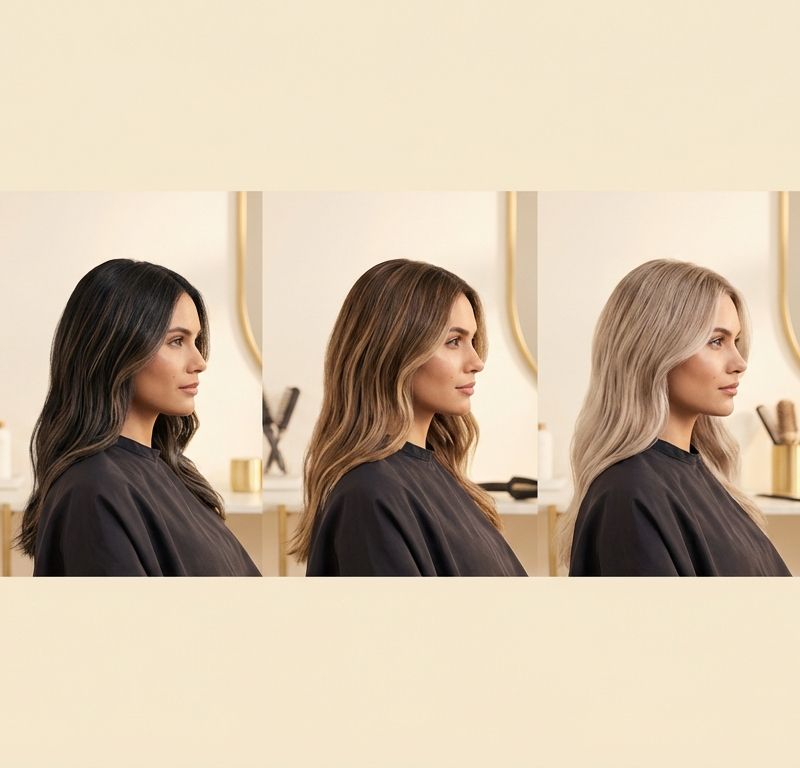
How much does going from brunette to blonde actually cost?
Costs vary significantly by city, salon, and technique. These are indicative ranges in the US and Europe. To estimate product quantities for each session, the developer mix calculator calculates the exact proportions based on the developer volume you’re using.
| Service | Cost per session | Notes |
|---|---|---|
| Lightening + toning | $100-250 / 80-200€ | Depends on length and technique |
| Bond-building treatment (essential) | $25-60 / 20-50€ | Olaplex, K18, or similar — every session |
| Monthly maintenance (toner) | $50-100 / 40-80€ | Every 4-6 weeks |
| At-home care products | $40-80 / 30-60€ | Purple shampoo, mask, heat protectant |
Estimated total cost (from level 4 to level 8-9):
- Salon sessions: 3-5 x $150-250 = $450-1,250
- First-year maintenance: ~$600-1,100
- Total first year: $1,050-2,350
We won’t sugarcoat it: being blonde is expensive. But it’s far more expensive to fix things if they go wrong at a cheap salon or from a DIY attempt.
The step-by-step process
Session 1: assessment + first lightening
Your colorist evaluates your hair’s condition, chemical history, and your goal. The first lightening lifts 2-3 levels. The result after this session is usually orange — that’s completely normal. Knowing which developer volume applies to each stage is critical; our developer volumes guide explains the logic in detail.
Session 2 (4-6 weeks later): second lightening
Another 1.5-2 levels are lifted. The tone shifts from orange to golden yellow. If the hair allows it, partial toning may be applied.
Session 3 (4-6 weeks later): final toning
If you’ve reached the necessary base level, the final tone is applied (ash, honey, golden, platinum). This is the session where you finally see the color you wanted.
Additional sessions (if needed)
For very dark starting levels (1-3) or very light targets (platinum), 1-3 more adjustment sessions may be required.
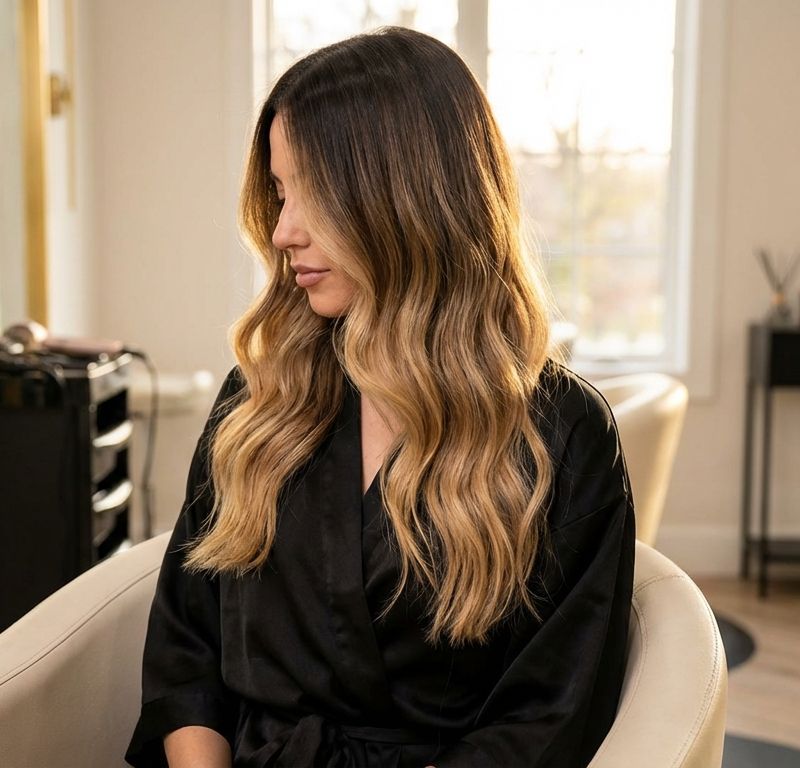
What can go wrong — and how do you avoid it?
Hair breakage
Why: lightening that’s too aggressive or sessions too close together. How to avoid it: space sessions at least 4 weeks apart. Use bond builders (Olaplex, K18) in every session. If you notice excessive elasticity or splitting ends, stop. According to Wella Professionals, using bonding treatments during the lightening process can significantly reduce fiber breakage in progressive lightening services.
Orange results
Why: the hair wasn’t lifted enough before toning. This is the most common mistake. How to avoid it: patience. The correct levels must be reached before applying tone. Trying to force ash blonde onto an orange base only gives a muddy result.
Dry, dull hair
Why: lightening opens the cuticle and strips moisture. How to avoid it: bond-building treatments at every session, weekly masks at home, minimize heat styling.
How do you care for hair between bleaching sessions?
Aftercare between sessions is just as important as the salon process itself. Well-nourished hair between sessions lightens more effectively at the next visit and significantly reduces breakage risk. The goal is to keep the hair fiber as intact as possible throughout the entire journey.
Weekly routine between sessions
- Sulfate-free shampoo (3 times per week maximum): Sulfates strip the cuticle’s lipids and accelerate color fading. With active lightening in the hair, reducing wash frequency is essential.
- Repair mask (minimum twice a week): Look for formulas with hydrolyzed proteins or ceramides. Leave it on for 15-20 minutes with gentle heat for better penetration.
- Oil for ends (daily): A light argan or jojoba oil on the ends reduces friction and prevents mechanical breakage between sessions.
- Heat protectant (before any heat styling): Non-negotiable. Bleached hair is far more heat-sensitive because the cuticle is already compromised.
What to avoid between sessions
- Flat irons above 180°C / 356°F
- Tight ponytails for extended periods (mechanical tension causes breakage on weakened hair)
- Very hot water when washing (lukewarm-to-cool water helps seal the cuticle)
- Additional chemical processes (relaxers, perms, keratin treatments)
Pro tip: Recommend fabric-covered elastics only — no metal-tipped bands that snag and break lightened hair. A small detail with real impact.
Realistic timeline table
Share this with clients at the first consultation to set accurate expectations:
| Starting level | Target | Sessions | Minimum time | Recommended time |
|---|---|---|---|---|
| Level 7 (dark blonde) | Platinum (9-10) | 1-2 | 4-8 weeks | 6-10 weeks |
| Level 6 (light brown) | Golden blonde (7-8) | 1-2 | 4-8 weeks | 6-10 weeks |
| Level 5 (medium brown) | Honey blonde (8) | 2-3 | 8-12 weeks | 3-4 months |
| Level 4 (dark brown) | Light blonde (8-9) | 3-5 | 3-5 months | 4-6 months |
| Level 3 (very dark brown) | Platinum blonde (9-10) | 4-6 | 4-6 months | 5-8 months |
| Level 1-2 (black) | Platinum blonde (9-10) | 5-8 | 6-10 months | 8-12 months |
The gap between “minimum time” and “recommended time” is the difference between reaching the goal with intact hair and reaching it with compromised hair. Patience is not optional.
What are the less aggressive alternatives to full bleaching?
If the full process feels like too much, there are intermediate options. Techniques like balayage and classic highlights let you lighten only where it matters with significantly less damage — you can see the differences and advantages of each in our article on balayage vs highlights.
| Alternative | Result | Sessions | Maintenance |
|---|---|---|---|
| Balayage | Gradual blonde (lighter ends) | 1-2 | Low (touch-up every 3-4 months) |
| Babylights | Subtle, natural blonde effect | 1-2 | Low-medium |
| Bronde | Brown-blonde blend | 1 | Low |
| Face-framing | Blonde pieces around the face only | 1 | Low |
These techniques are ideal if you want to try blonde without going all in. You can see how they’d look on you using the simulator before deciding.
You can also use the bleach level predictor to estimate how many levels you need to lift and what products to use at each stage.
Frequently asked questions
Can I go from brunette to blonde in one session?
Not recommended. Lifting more than 3-4 levels in one session risks breakage, orange tones, and severe damage. The exception: if you start at light brown (level 6) and want medium blonde (level 7-8), it may be possible in one session.
How long does it take for new hair to grow after bleaching?
Hair grows an average of 1-1.5 cm (0.5 inches) per month. If you experience damage, growth doesn’t slow down, but it takes time for new hair to replace damaged length. With strategic trimming and good care, you can have healthy medium-length hair in 6-12 months.
Should I do this at a salon or at home?
At a salon. Always. Progressive lightening requires evaluating hair condition between sessions, adjusting peroxide volumes and processing times. A mistake at home can cause irreversible damage.
Which blonde shade is easiest to maintain?
Golden blonde and honey blonde are the easiest because warm tones better disguise root growth. Platinum and ash blonde require more maintenance because any yellow tone is immediately visible.
How can I see what I’d look like before doing it?
Use the Blendsor color simulator. Upload your photo, choose the blonde shade you’re interested in, and see the result in seconds. It’s free and requires no sign-up.
Can I go back to brunette after going blonde?
Yes, but it’s also a process. Bleached hair doesn’t retain dark pigment easily — it needs to be “refilled” with intermediate pigments (pre-pigmentation). This usually takes 1-2 salon sessions.
Key takeaways
- Medium brown to blonde: 2-3 sessions, 2-4 months, $300-750.
- Dark brunette to blonde: 4-6 sessions, 4-8 months, $750-1,800.
- Patience is mandatory: rushing the process causes irreversible damage.
- Preview before you start: the Blendsor simulator shows you the result on your photo, free.
See how you’d look as a blonde
Honey blonde, ash, or platinum? The Blendsor color simulator shows you the result on your own photo in seconds. Free, no sign-up.
Your blonde journey starts here.
Related articles
Practice with our colorimetry tools
Calculators, neutralization wheel, AI consultation...
The Blendsor newsletter
Color techniques and trends for professionals. No spam.
A client in the chair right now?
The Blendsor advisor gives you the precise formula for this technique with your salon's brands — and saves it to your client's card.
Ask about your caseWritten by the Blendsor team
Professional hair colorimetry experts with experience in AI-assisted formulation. We combine color science, salon practice and technology to help colorists formulate with precision.