Caring for Color-Treated Curly Hair Without Dulling It
Your curls didn't lose their shine — they never had that mirror finish. What they do lose is pigment. Here's what to change at home, and what advice to skip.
Blendsor
Blendsor Team
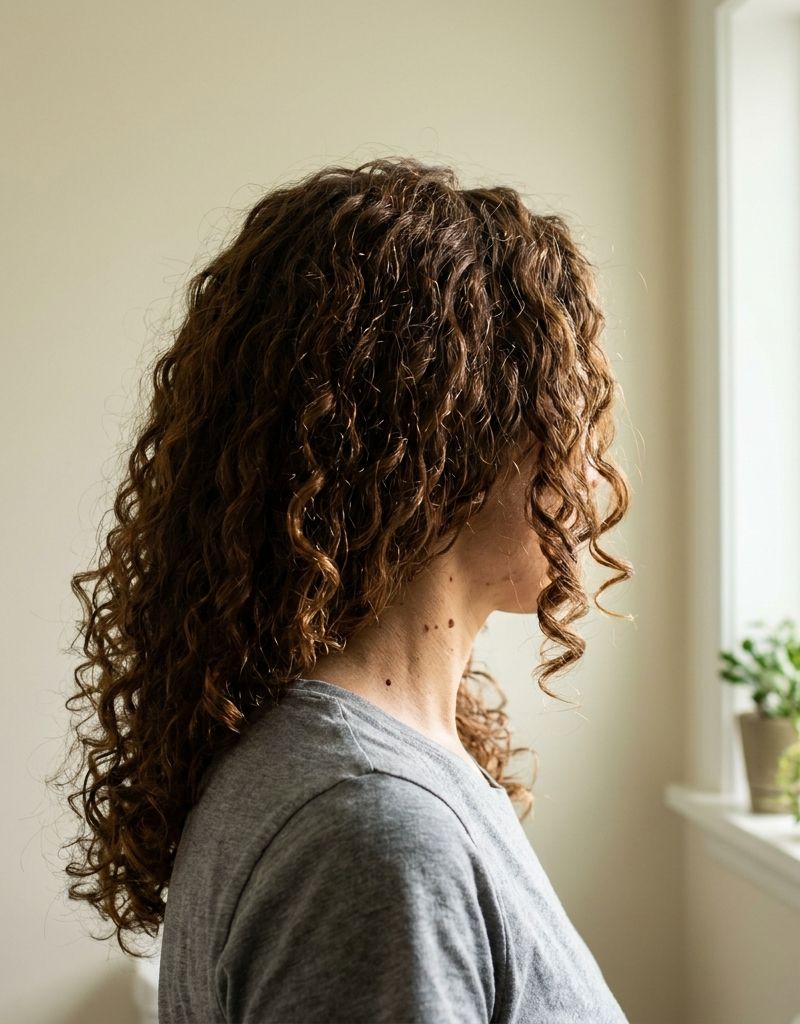
Your color-treated curls didn’t lose their shine. They never reflected light the way straight hair does, and that’s geometry — not damage. What you actually lose over the weeks is pigment, and it leaves through porosity your curls pick up from heat, detangling and washing. Two different problems, and only one of them is fixable at home.
Short version: if your color-treated curls looked flat from day one, that’s the curl pattern. If the color looked rich and has been fading, that’s pigment. This article separates the two and tells you what to do about each.
You know the scene. You leave the salon with exactly the color you asked for, it looks incredible under those lights, and two days later your own bathroom mirror tells a different story. So the product hunt begins.
Most of the time, it’s aimed at the wrong problem.
Why does color-treated curly hair look dull even when the color is fine?
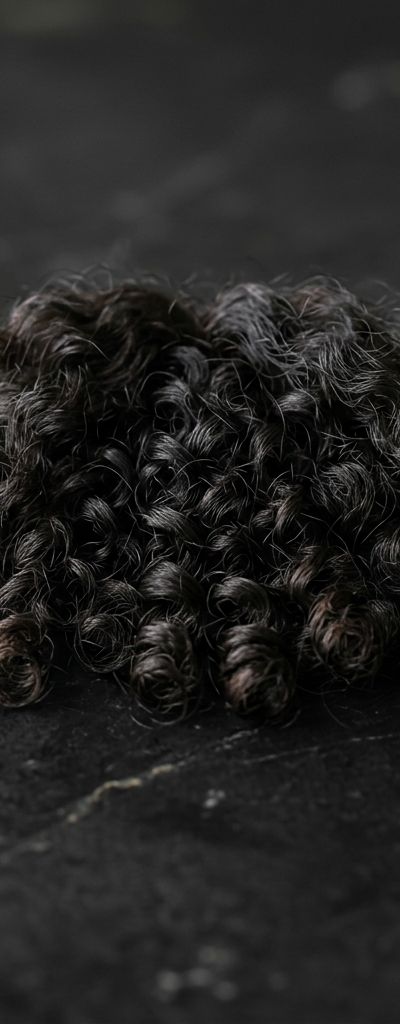
Because light doesn’t come back the same way from a spiral as it does from a straight fiber. On straight hair the fibers run parallel and the reflection concentrates in one area. On a head of curls, every bend points somewhere different, so that same reflection spreads out across the whole head.
This isn’t a metaphor. According to research by McMullen and Jachowicz in the Journal of Cosmetic Science, African hair — made up of many curls — provides multiple and randomly distributed reflection centers, as against the aligned, concentrated reflection of straight hair.
In mirror terms: straight hair concentrates shine into a stripe you can see across a room. Curls spread it into small highlights you notice up close, or when the sun hits from the side. That study measures African hair; the looser your wave, the closer your reflection sits to straight hair’s.
Here’s why that matters to you: curls can be perfectly healthy, well-hydrated, and still not look glassy. That finish belongs to a different geometry. Chasing it with more product doesn’t get you there, and usually ends in hair that’s weighed down and won’t move.
The signal that actually counts: don’t compare your shine to straight hair. Compare it to your own hair three weeks ago. If that dropped, now you have something worth investigating.
To work out which of the two problems you’re in, look at when it started and what changed:
| What you see | When it shows up | What it is | What to do |
|---|---|---|---|
| Flat from day one, tone correct | Walking out of the salon | Curl geometry | Nothing — the color is fine |
| Tone reads lighter or duller over weeks | Around wash 3 or 4 | Pigment loss | Look at washing, heat, friction |
| Roots hold color, ends look washed out | Gradual | Uneven porosity | Targeted care on the lengths |
| Dull, heavy, no movement | After weeks of heavy product | Buildup | Space out treatments |
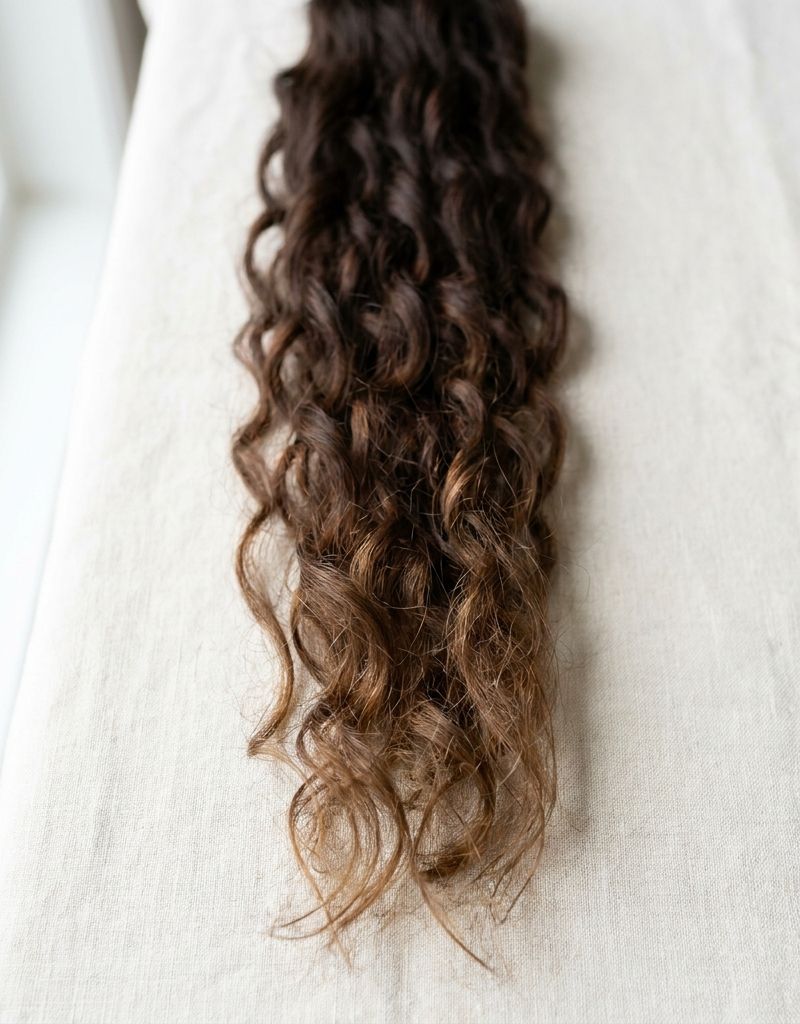
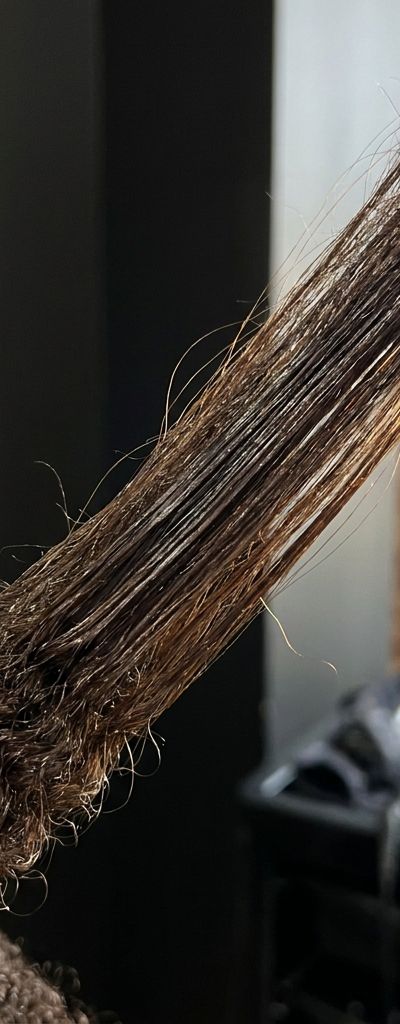
The same fiber, two ages: above, the color that holds. Below, the color already gone.
What you actually lose: pigment, and where it goes
The color does leave. And it leaves through porosity.
Porosity is your hair’s ability to let water and pigment in and out. It comes down to the state of the cuticle, that outer layer of overlapping scales wrapped around the fiber. Lying flat, it holds. Lifted, pigment goes in fast and comes out just as fast. We cover it fully in the hair porosity guide, and the wider framework lives in the colorimetry basics guide.
Now the part that gets told badly everywhere, and it’s worth being precise because the opposite claim is everywhere: curly hair is not always high porosity. Virgin curls can sit at low or medium porosity perfectly well. What happens is that the spiral shape leaves the cuticle more irregular, and that irregularity gets mistaken for high porosity by eye.
What curls do is acquire porosity more easily. The general wear factors that fade any color — heat, hard water, sun — are covered in the color longevity guide. What follows are the three routes that belong to the spiral specifically and don’t appear on that list:
| Route specific to curls | What happens in the fiber | Where you notice | What stops it |
|---|---|---|---|
| Sebum never reaches the lengths | Scalp oil travels poorly along a curved fiber and stays near the root | Mid-lengths and ends | A leave-in or light sealing oil, mid-lengths through ends |
| Dry detangling | The spiral tangles into itself; separating it without water or product drags the scales | Tangle-prone zones | Detangle wet and with product, from the ends up |
| Overnight friction | Eight hours rubbing against cotton breaks the curl pattern and lifts cuticle | Crown and hairline | Satin or silk pillowcase, a bonnet, or hair loosely piled on top |

Eight hours count as care too.
On that first route, the scope of the evidence deserves precision. The clinical review on Afro-textured hair care in the International Journal of Women’s Dermatology describes how the fiber configuration and retro-curved follicle impair the distribution and absorption of sebum along the hair shaft. It’s worth reading that with the caution it was written with: the review studies Afro-textured hair and phrases it conditionally — it says this configuration is thought to impair sebum distribution. For looser curl patterns no equivalent published measurement exists, so treat it as a plausible direction rather than a settled figure: the tighter the coil, the further scalp oil stays from your ends.
And that’s the link to your color: where sebum doesn’t reach, the fiber is left without its natural lubricating film and handles everyday friction worse. It’s why the same head of curls holds tone at the roots while the mid-lengths and ends give it up.
That unevenness doesn’t start at home — it starts with how product lands on a spiral in the first place, which is an application question we cover in why color comes out uneven on curly hair. And if bleach is anywhere in your history, you’re starting from a different place — bleaching curly hair explains why everything moves faster on an already-lifted fiber.
The factor that’s missing from every list
If you’ve read about how long hair color lasts, you’ve seen the usual six factors: porosity, wash frequency, shampoo type, heat, hard water and sun. Texture isn’t one of them.
That’s not an oversight. Texture isn’t a seventh factor — it’s a multiplier on the first one. It doesn’t strip color by itself; it makes the other six hit you sooner and harder, because they all end up acting on the same cuticle, which in your case has less protection to begin with. Same shampoo, same blow dryer, two different outcomes on two people wearing the same shade.
Washing weekly doesn’t cost you color
There’s a piece of advice worth dismantling: “wash as little as possible so the color lasts.” Taken to its extreme it’s false, and it works against what your scalp needs.
On the color side, what genuinely costs you is daily washing. Past that the curve flattens fast, and our own color longevity table puts weekly washing squarely at maximum retention. Stretching beyond that doesn’t buy you more color — you’re already at the ceiling.
On the scalp side, that same clinical review recommends gentle weekly cleansing for Afro-textured hair, and warns that stretching to biweekly or monthly is associated with higher risk of seborrheic dermatitis and traction alopecia.
Both point the same way, so there’s no dilemma to resolve here: once a week is both the color’s ceiling and what a tightly coiled scalp is asking for.
With one caveat worth stating, because the clinical evidence above is drawn from Afro-textured hair and not from every curl pattern: the tighter your coil, the closer you stay to weekly; on looser curls and waves — especially with an oily scalp, or if you train — two or three gentle washes a week won’t cost you color against a weekly one. The enemy was daily washing, not the third wash.
What actually costs you color isn’t frequency. It’s how you wash.
- Lukewarm water, never hot. Hot water swells the fiber and lifts the scales at exactly the moment it’s pulling pigment out. Biggest return, costs nothing.
- A gentle shampoo. “Sulfate-free” helps, but on its own it doesn’t tell you the wash is mild: if the bottle or the brand’s site lists a pH of 4.5 to 5.5, that’s the number you want. If it isn’t stated anywhere, don’t chase it with test strips — go by feel instead: hair that squeaks and feels rough as you rinse is telling you the wash is too harsh.
- Wash your scalp, not your lengths. Apply at the roots and let it travel down with the rinse. That’s enough for the lengths — unless you use gel or styling creams daily, in which case add a gentle clarifying wash every three or four weeks, or residue builds up and lands you in the “dull from product” row of the table above.
- Detangle wet, with product in. Never dry, never from the top down: start at the ends and work up.
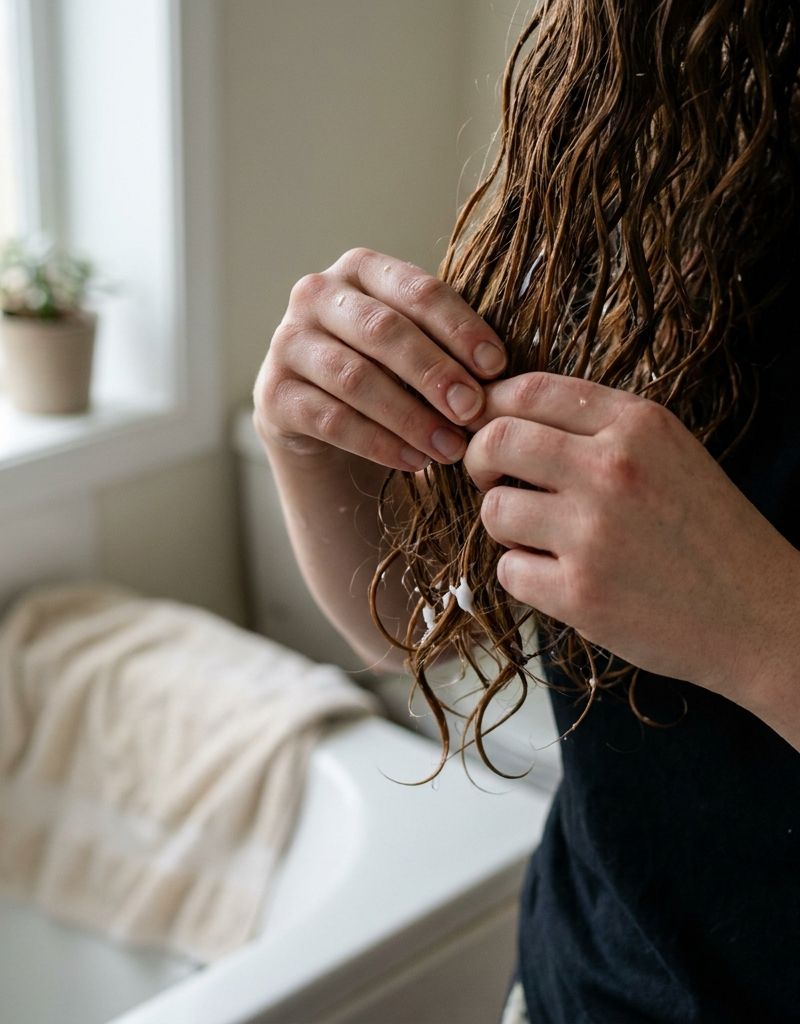
The moment your curls decide how much cuticle they keep.
That fourth point isn’t about comfort. Research on curly hair breakage in the British Journal of Dermatology maps out the sequence of failure: cuticle scales slide first, then the interface between cuticle and cortex — the inner fiber — fails, then internal cracks grow and travel toward the surface. It’s a lab study on virgin hair from a single African-American donor — not color-treated hair — under controlled mechanical load rather than actual combing, so take it as the mechanism, not as a statistic and not as proof that wet detangling is better. But the mechanism is the point: no single tug looks like damage, and they add up.
What deep conditioning really does — and what it doesn’t
This is where hope gets spent, and where the disappointment usually lands.
Start by separating three things that get lumped together and don’t behave the same:
| What it does | How often | |
|---|---|---|
| Moisture (mask, conditioner) | Returns water and flexibility to the fiber | Weekly, no fear: on color-treated curls that’s routine, not excess |
| Protein / keratin | Closes the cuticle temporarily | Spaced out: this is where overload happens, and it shows as stiffness and breakage |
| Buildup | Neither of the above — it’s residue | Comes from silicones, waxes and gels, not from moisturizing |
On protein specifically, here’s the figure worth knowing: it closes the cuticle temporarily, for a few weeks, tapering with every wash, as we cover in the porosity guide. While it’s closed, pigment leaves more slowly.
What no product does: change your porosity backwards. New growth arrives with the porosity it’s due, without inheriting the previous damage.
And the practical nuance: repeating protein weekly doesn’t extend its effect — on curls, excess protein stiffens the fiber and invites breakage. Moisture is a different thing, and that one is weekly.
Before your next appointment: if you’ve been heavy on pigmented masks or protein treatments, say so. Product buildup fools the eye, and whoever formulates for you may see a tone that isn’t really yours.
Frequently asked questions
Why does my color-treated curly hair look dull from day one?
It’s probably not the color — it’s how a curved fiber returns light, in scattered points rather than one band. If the tone is what you asked for and the flatness was there from the start, that’s geometry. If the color looked rich and has faded since, that’s pigment loss.
How often should I wash color-treated curly hair?
Once a week is a solid reference point, and conveniently it’s where both needs meet: it’s where color hits maximum retention, and it’s also the regular gentle cleansing the clinical literature recommends for Afro-textured hair, the texture where it’s best studied. Stretching to a month won’t buy you more color and does add scalp risk. Adjust water temperature and shampoo type before you adjust frequency.
Is curly hair always high porosity?
No. Virgin curls can be low or medium porosity. The spiral makes the cuticle more irregular and that gets mistaken for high porosity by eye. What is true is that curls acquire porosity more readily once heat, friction and color are in the picture.
Does dry shampoo help me stretch my color?
It helps you space washes, but it doesn’t replace cleansing your scalp. Use it to buy a day, not to skip your wash routine, and rinse thoroughly when the time comes — buildup at the roots shows up sooner on curly hair.
Is UV protection for hair worth it?
Yes, especially if your color carries a tone. UV oxidizes pigment — one of the six factors in the color longevity guide — and filters slow that down without stopping it outright. They also rinse away, so reapplying matters. On curls there’s a bonus: you apply it along the lengths, which is exactly where scalp oil never reaches.
The short of it
- Shine and color are two separate problems. Curls spread light instead of concentrating it — that isn’t fixed, it’s understood.
- What you lose is pigment, through porosity your hair acquires, not the porosity it was born with.
- Texture isn’t one more factor: it multiplies the others, because it acts on a less protected cuticle.
- Don’t wash less — wash differently. The enemy is the daily wash, not the third one. The tighter the coil, the closer to weekly; on looser curls, two or three a week won’t cost you color.
- Moisture isn’t the same as protein. Moisture goes weekly and without fear; protein, spaced out. What builds up and dulls is silicones, waxes and gels — not your mask.
- Sleep on satin and never detangle dry. They’re the two curl-specific wear routes you can cut today without buying anything.
If you work behind the chair: the handoff that prevents the most rescue appointments on curly clients is explaining the shine-versus-pigment difference in the chair itself. Someone who leaves believing their curls “lost their shine” comes back asking to go lighter to compensate — and that’s the long road to a more porous head of hair holding even less color.
Find out where your porosity actually sits
Want to know whether your hair holds color or lets it go, before spending on products you may not need?
What did you notice first on your color-treated curls: losing shine, or losing color?
Related articles

The Blendsor newsletter
Color techniques and trends for professionals. No spam.
The second opinion, in your pocket
Photo, question, an answer grounded in colour theory. And every formula saved to your client's card.
Start with BlendsorWritten by the Blendsor team
Professional hair colorimetry experts with experience in AI-assisted formulation. We combine color science, salon practice and technology to help colorists formulate with precision.