Sand Blonde: The Low-Maintenance Formula
Sand blonde formula step by step: a shadow root plus a gloss for a blonde that holds six weeks. Ratios by level, timing, and the mistakes to avoid.
Blendsor
Blendsor Team
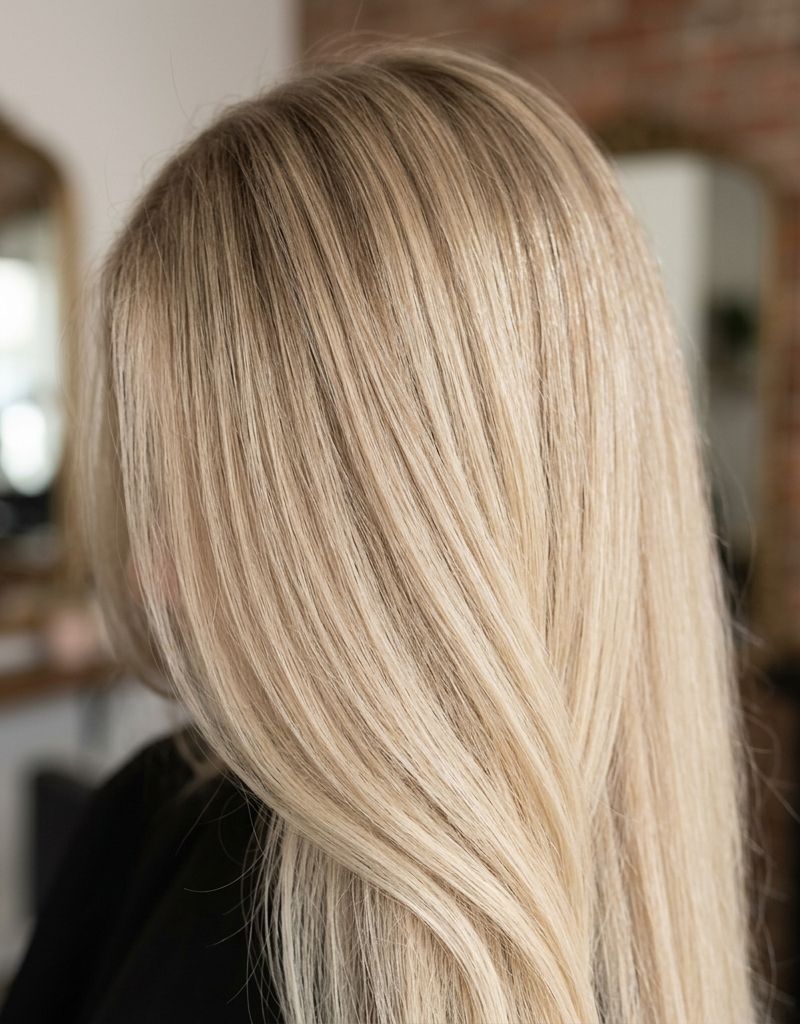
How many times have you nailed a gorgeous blonde on Friday, only for the client to text you three weeks later because “the roots are showing”?
If you work with blondes, you know the treadmill. A beautiful color isn’t the problem. The problem is the calendar it drags behind it: a root that contrasts too hard and a tone that fades too soon push the client back into your chair every few weeks. And every visit that adds nothing new is a color that can’t defend its price.
Today you’ll see how to formulate sand blonde so that calendar stops working against you: a two-piece system with separate, honest jobs, where the root holds and the tone refreshes only when it actually needs to.
What is sand blonde and why is it low maintenance?
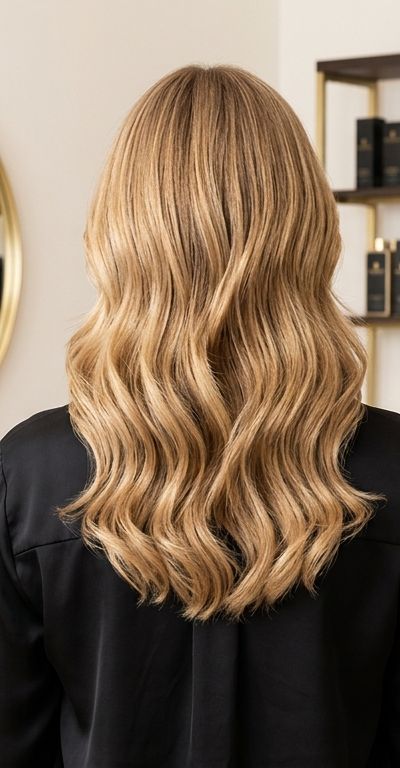
Sand blonde is a neutral beige blonde, neither warm nor cool, at levels 8-9, with a muted gold that reads like dry sand. It’s low maintenance because you don’t build it as a single color: you design it as two independent pieces: a shadow root that buys weeks of grow-out without urgency, and a sand gloss that carries the tone and refreshes around the 4-6 week mark. Each piece runs on its own clock.
Here’s the mindset shift. Most blondes are treated as one result you have to maintain whole. Sand is an anchor that lasts (the root) plus a finish that renews (the gloss). Split those two clocks and the client doesn’t come back because it “looks bad”—she comes back when the tone asks for a touch-up, and that touch-up is short, cheap, and lift-free.
Don’t confuse sand with boy blonde: that one is a golden blonde with a marked visible root and a sunlit look. Sand is more muted, more neutral, more “studio beige.” They share the low-maintenance philosophy, but the undertone and the formula are different.
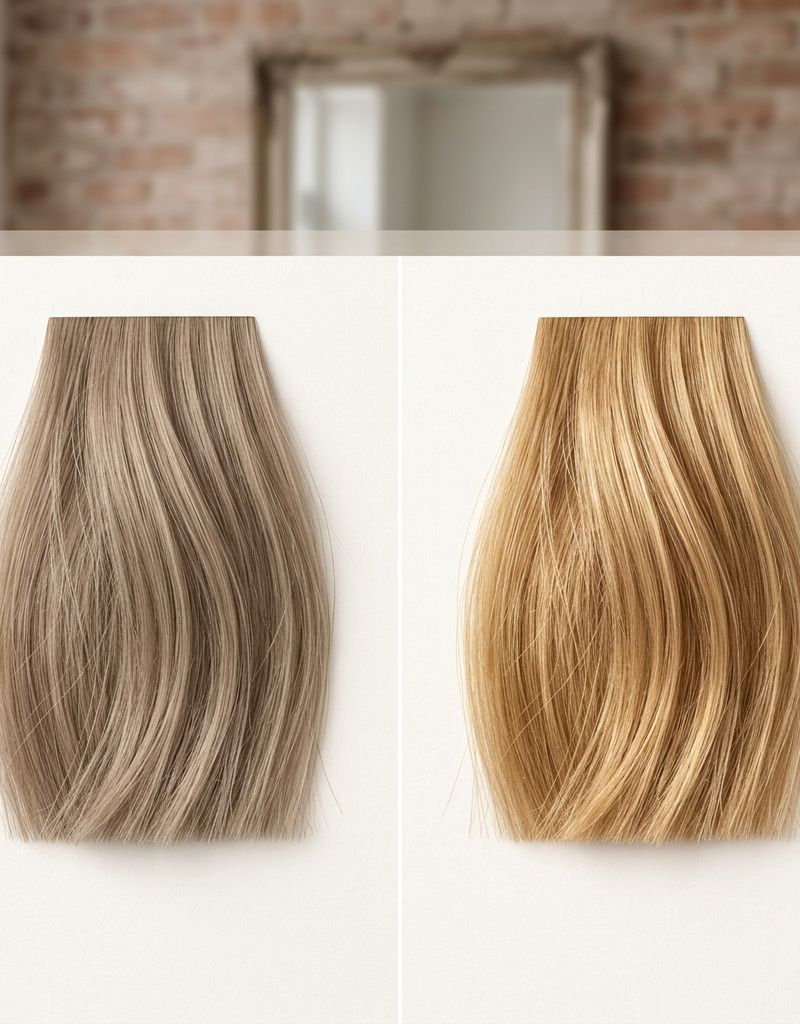
The two-piece system: shadow root plus sand gloss
Sand works because each piece does one job, and does it well. Blend them and you lose control of both clocks.
The shadow root: the anchor that buys weeks
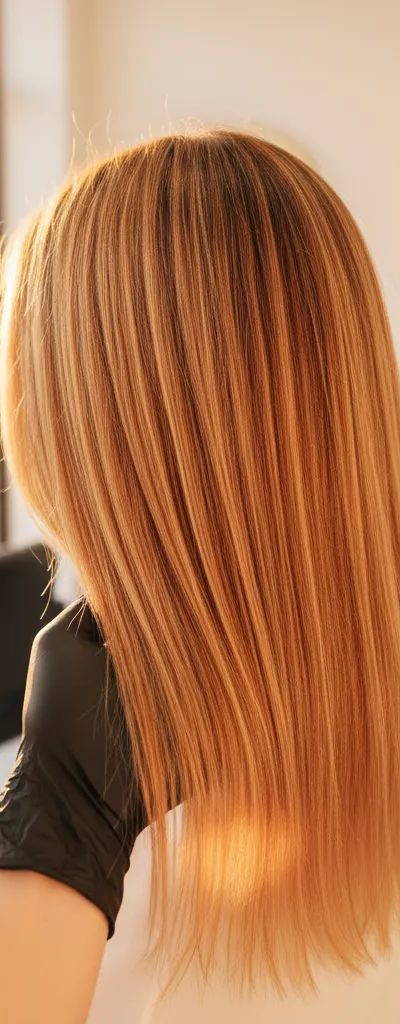
The shadow root is a shade one level below the lengths, applied to the first 3-4 centimeters (about an inch and a half) and diffused downward with no line. It isn’t a dark root: it’s a transition that lets natural regrowth melt in instead of clashing.
That detail is what buys time. A blonde that’s uniform from the scalp screams at three weeks because the new root breaks against the light lengths. With a shadow root, those first centimeters are already a touch deeper by design, so regrowth takes longer to demand attention. The clock is set by contrast, not by a fixed calendar: if the natural base sits at level 7 or higher, it holds 6-8 weeks; if there’s more contrast against a level 5-6 base, it drops to 4-5 weeks. The smaller the gap between base and target, the more time you buy.
Pro tip: apply the shadow root with a dry brush technique, no saturation, easing off as you move away from the scalp. The goal is that you can’t tell where it starts and where it ends.
The sand gloss: the living tone that refreshes
The gloss is the second piece. It’s a demi-permanent that deposits pigment in the cuticle without lifting, on a 6-10 volume developer, and it fades gradually with no line of demarcation. Everything you need to know about gloss as a technique lives in the professional hair gloss guide; here we use it for one specific job: locking in that sand beige.
The gloss is what makes sand sand. On a blonde base, pure gold reads too yellow; the beige is born from a muted soft gold with a whisper of ash that pulls it to neutral. Mind the role of each tone: the ash builds the beige—it isn’t there to cancel yellow. And because the gloss is deposit-only, when it goes it leaves no gloss root or band: it fades soft and asks for a clean touch-up around 4-6 weeks.
An honest heads-up you owe the client: the gloss tone doesn’t last three months. It’s a demi-permanent and its real life sits between 4 and 6 weeks depending on washing and porosity. Promising more is the fast lane to a letdown. The root holds; the tone refreshes. That’s the deal.
How do you formulate sand blonde by starting level?
Sand lives at levels 8-9. The path depends on where you start: from light blonde you only deposit; from mid blonde you need to lift before you tone. In both cases, the shadow root goes on last, over the already-toned result.
Starting level 8-9 (light blonde)
This is the ideal scenario, because there’s no lifting. You cancel the residual yellow and deposit the beige in the same pass with the gloss.
Sand gloss base: level 9 soft gold (.3) with a micro-dose of ash (.1) to mute the warmth without going cool. Ratio rules: gold dominates, around 4:1 over the ash, and you adjust by what you see on the strand test. Careful with ash on a level 8-9 that still reads clearly yellow: overdo it and it turns green (blue + yellow = green). If the base is genuinely yellow and you need to knock it down, the right choice isn’t ash but a touch of violet (.2); see the guide to neutralizing brass and yellow.
Timing: 10-15 minutes, watching it. On porous hair the gloss grabs faster and can go darker.
Starting level 6-7 (mid-dark blonde)
Here you’re short on lightness. You need a controlled pre-lift to an 8-9 underlying pigment (pale yellow) before you can deposit sand. If it comes up orange after lifting, don’t cover it with ash: you’re under-lifted. Lift again to pale yellow and then gloss (canceling orange with ash gives a muddy green, not a beige). Sand is tone design, not a fix for an incomplete lift; the brass-neutralizing guide walks through that step.
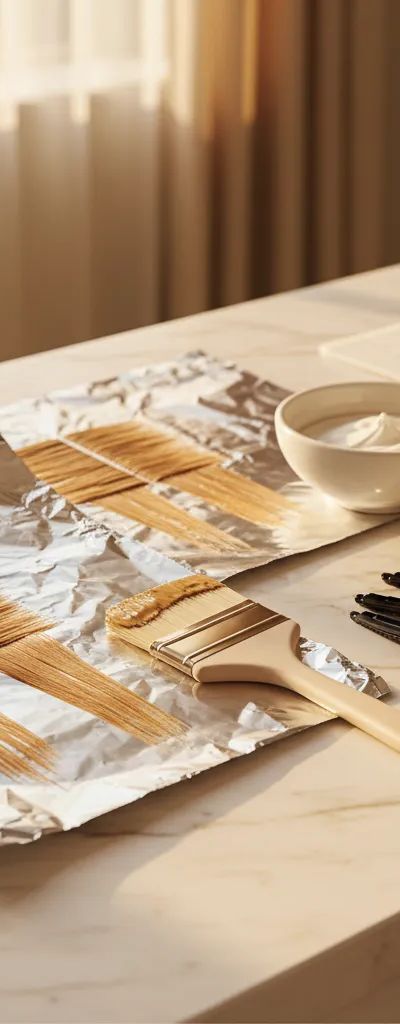
Step 1 — Lift: gentle lightening to an 8-9 underlying pigment, pale yellow and even. Step 2 — Sand gloss: same logic as level 8-9, soft gold (.3) dominant with a touch of ash (.1).
Gloss ratios by brand
Deposit-only gloss changes ratio and developer by line. These are the reference ratios, verified in the hair gloss guide:
| Brand (gloss/demi line) | Ratio color:developer | Developer |
|---|---|---|
| Wella Color Touch | 1:2 | 6 vol (1.9%) |
| Redken Shades EQ | 1:1 | Processing solution |
| L’Oréal Dia Light | 1:1.5 | 6 vol |
| Schwarzkopf Igora Vibrance | 1:1 | 6 vol (1.9%) |
Respect each line’s developer. Jumping to 20 or 30 volume turns a gloss into unwanted lift and breaks the low-commitment logic.
What are the most common mistakes formulating sand blonde?
Sand almost always breaks for one of two reasons: mixing the two clocks, or selling what it isn’t. These are the three that ruin it most.
- Melting the root and the tone into one application: if you tone everything the same from the scalp, you lose the anchor. The shadow root goes in its zone and the gloss in the lengths—two gestures, not one.
- Chasing sand over an orange base: the beige gloss won’t fix a level 6-7 orange—that orange is an incomplete lift. If the base didn’t reach pale yellow, you lift again, you don’t cover it with ash; then you deposit sand. The order isn’t negotiable.
- Promising the tone lasts like a permanent: the gloss is a demi. It lasts 4-6 weeks. Tell the client three months and the letdown arrives on schedule—and the blame lands on you, not on the chemistry.
Pro tip: always run a strand test of the gloss before you saturate. Sand beige lives in a narrow margin: a hair too much ash and it dulls to grey, a hair too little and it drifts gold. The test saves you the scare.
Frequently asked questions
What’s the difference between sand blonde and boy blonde?
Boy blonde is a golden, warm blonde with a marked visible root and a sunlit look. Sand blonde is more neutral and muted, a studio beige with low gold. They share the low-maintenance idea, but sand uses a more neutralized tone and a diffused shadow root instead of a high-contrast visible root.
How long does sand blonde last between appointments?
It depends which piece you look at. The shadow root holds 6-8 weeks when contrast is low, because regrowth melts in instead of clashing. The sand gloss, being demi-permanent, keeps its tone 4-6 weeks before it asks for a touch-up. That’s why sand is profitable: the return visit is a short gloss, not a full service.
Can I do the sand gloss over grey hair?
A gloss blends scattered grey, giving it a veil effect rather than solid coverage. But the deciding factor isn’t a percentage—it’s where the grey sits and how resistant it is. Grey spread across the head integrates well; grey clustered at the temple or part line, or resistant grey, calls for a permanent at the root, and there sand stops being a low-maintenance system.
Do I need to bleach to get sand?
Only if you start at level 6-7 or darker. From light blonde (level 8-9) sand is achieved by depositing with the gloss, no lifting. The lighter and cleaner your starting base, the truer the beige comes out and the gentler the process.
In short
- Sand blonde is a neutral beige blonde at levels 8-9 designed as two independent pieces, not one color.
- The shadow root is the anchor: it buys 6-8 weeks of grow-out when contrast is low.
- The sand gloss is the living tone: soft gold (.3) dominant with a touch of ash (.1), deposit-only, refreshing at 4-6 weeks.
- Don’t chase sand over an orange base: lift to pale yellow first, then deposit.
- Be honest about the tone’s life: the gloss lasts 4-6 weeks, not three months.
Formulate sand blonde with precision
Want to generate the exact sand gloss and shadow root formula by starting level and each client’s color history?
And you — how are you solving low-maintenance blonde behind the chair today?
Related articles
Practice with our colorimetry tools
Calculators, neutralization wheel, AI consultation...
The Blendsor newsletter
Color techniques and trends for professionals. No spam.
A client in the chair right now?
The Blendsor advisor gives you the precise formula for this technique with your salon's brands — and saves it to your client's card.
Ask about your caseWritten by the Blendsor team
Professional hair colorimetry experts with experience in AI-assisted formulation. We combine color science, salon practice and technology to help colorists formulate with precision.