Dark Mid-Lengths and Ends: Correcting Color Buildup
How to correct dark mid-lengths and ends from color buildup without touching the root. Reductive remover vs bleach, zone technique and mistakes.
Blendsor
Blendsor Team
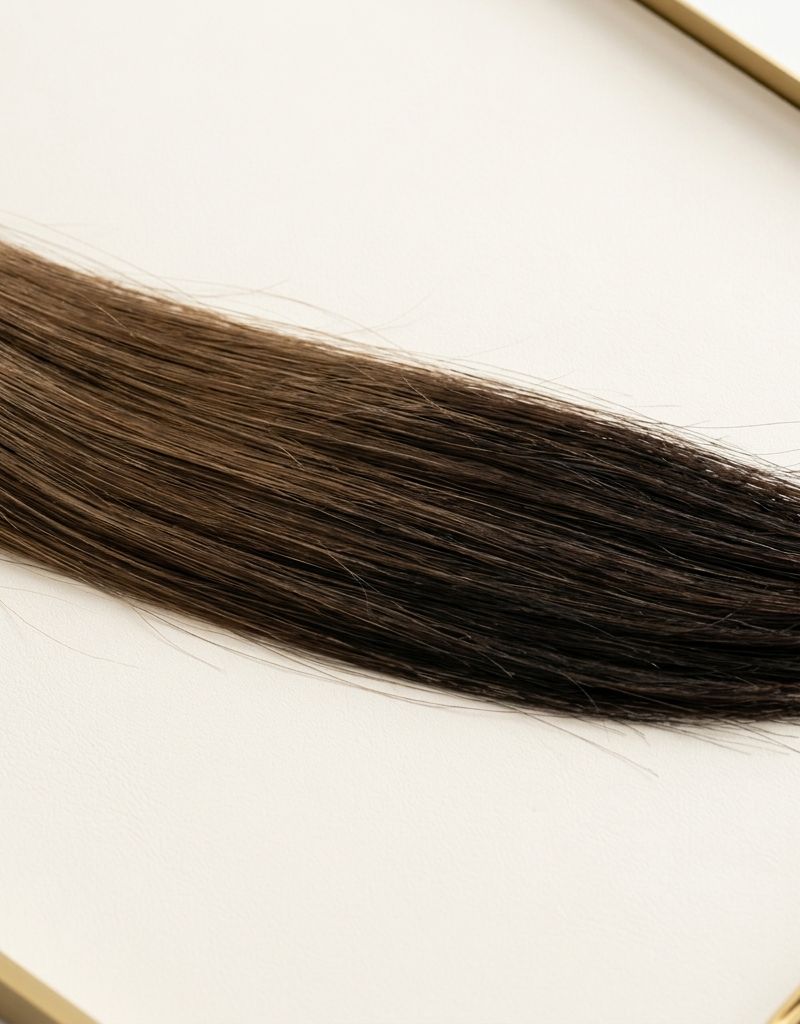
Have you been noticing that your client leaves with a perfect root but the mid-lengths and ends keep getting darker? And on top of that, you haven’t changed the formula?
I know exactly what that looks like. There’s a clear technical explanation, and there’s a solution too. But it’s not the one most people reach for.
The most common mistake here is treating all the hair the same. Lifting globally when the problem is only pigment buildup in one zone is unnecessary, aggressive, and on top of that, it doesn’t fix the cause.
Quick summary: when the mid-lengths and ends darken service after service without changing the formula, the cause is pigment buildup from overlapping repeated retouches. The correction isn’t global: it’s extracting the excess artificial pigment only where it’s in excess, respecting the root that’s already fine. That’s what the reductive color remover is for, not a clarifying shampoo or direct bleach.
Why do the mid-lengths and ends darken even when the root is fine?
Every time the root retouch drags even a few centimeters into the mid-lengths, a new layer of pigment is deposited over the previous one. Service after service, even if you use “the same dye as always,” the mid-lengths accumulate more pigment than the formula intended.
The result: the root stays at level 6, just as you wanted. The mid-lengths, on the other hand, hold pigment equivalent to four or five consecutive applications. They read as a level 4 or even 3.
There’s a second factor that makes it worse. The fiber in the mid-lengths and ends is older, it has had more treatments, more heat exposure and more washes. That makes it more porous. And a porous fiber absorbs pigment more easily and holds it longer. Double accumulation: more deposit going in and less loss coming out.
This has a direct consequence for the correction: that same porosity that built up the problem will also absorb anything you apply next more greedily. If you don’t control the process, you over-lift before you realize it.
The chemistry of permanent oxidation dyes forms covalent bonds inside the hair cortex that aren’t removed by conventional washing. That’s why accumulated pigment doesn’t disappear on its own over time: it’s not about waiting, you have to extract it.

Extraction or bleach? Which one to use to remove the excess by zone
This is the key question. And the answer depends on exactly what you want to do.
Color extraction (reductive color remover)
The reductive remover acts on the artificial oxidation pigment. It breaks the bonds of the synthetic colorant without touching the fiber’s natural melanin. The result: it removes what the dye deposited, but it doesn’t lift the hair’s base level.
Use it when the real level of the mid-lengths is correct but hidden by the excess accumulated artificial pigment. If the hair was a level 6 and repeated dyes have darkened it visually, the remover can bring you back to that real level 6 without unnecessary aggression.
What it doesn’t do: lift melanin. If the mid-lengths need to come up in real level (not just remove artificial pigment), the remover won’t reach that goal.
Gentle bleach with low volume
If you have to raise real level in addition to removing artificial pigment, then yes, you need oxidation. But in an already porous zone, the volume must be low (10 or 20 volumes maximum) and the processing time short and watched closely.
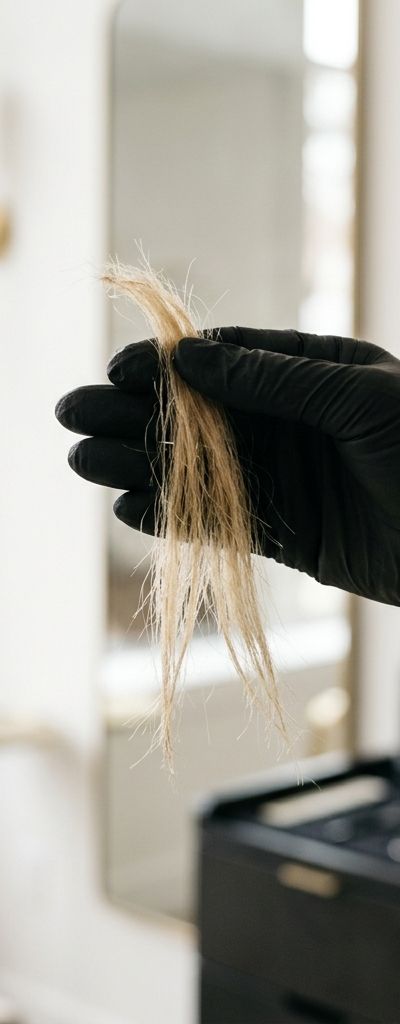
Bleaching on porous mid-lengths and ends doesn’t behave like it does on virgin fiber. The reaction is faster, the risk of over-processing is high, and the result can come out uneven if it isn’t controlled.
| Situation | Right tool |
|---|---|
| Accumulated artificial pigment, real level correct | Reductive remover |
| Real level also needs raising | Low bleach (10-20 vol), watched timing |
| Only surface darkening after service | Clarifying shampoo (minimal effect on fixed oxidation) |
| Oxidation pigment already fixed in porous fiber | Clarifying shampoo (NOT enough, doesn’t act on covalent bond) |
One important point that many overlook: a clarifying shampoo or hydrogen peroxide alone won’t lift oxidation pigment that’s already fixed. The clarifier removes surface deposits (minerals, product residue), but it doesn’t break the bonds of the oxidative colorant inside the cortex. If you confuse these tools, you waste time and the client comes back the same.
How to apply the correction without touching the root?
Application technique is where this correction is won or lost.
1. Assess the fiber before you start
Look at how the fiber is doing in the mid-lengths and ends: elasticity, shine, how it reacts to water. A very porous fiber needs more control, not more product. If you see it’s badly compromised, consider whether the timing is right or whether you need to work on the structure first.
Check the history too. Knowing how many retouches overlapped and with what formula tells you how much pigment is accumulated.
2. Define the working line precisely
The root isn’t touched. Decide exactly where the excess accumulated pigment starts and mark it mentally before you pick up the applicator. Don’t improvise the line while you apply.
3. Apply from mid-lengths toward ends, respecting the root
For the reductive remover: apply only on the affected zone, leaving a clear margin from the root. If you have any doubt the product might drag, use petroleum jelly or a protective cream along the separation line before you start.

4. The ends come after, not first
The ends are the most porous and will react faster. If you apply at the same time on mid-lengths and ends, the ends will clear sooner. Common technique: start on the mid-lengths, let it work for a few minutes, then complete on the ends. Or apply less product on the ends from the start.
5. Watch every 5-10 minutes and know when to stop
There’s no standard time here. You have to check the progress physically. When the zone reaches the desired level, neutralize and rinse. Going over time on porous fiber leaves a lighter result on the ends than on the mid-lengths, and you’ll have created another imbalance.
6. Always tone or correct the tone afterward
After an extraction process, the fiber is left open and the tone can be warm or uneven. Close the process with a toning or gloss that unifies and adds complementary pigment at the level you’re after.
Common mistakes when correcting buildup darkening
1. Treating all the hair the same
The most expensive mistake. Applying the process across the whole length when there’s only a problem in the mid-lengths and ends is unnecessary for the root (which is already fine) and aggressive for the whole. On top of that, it can open the root more than you want and throw off the final result.
2. Using clarifying shampoo thinking it lifts oxidation pigment
The clarifier is useful for removing buildup of water minerals, silicone residue and surface deposits. It doesn’t break the covalent bond of oxidation pigment already fixed inside the cortex. Using it as a “prep step” does no harm, but it doesn’t solve the underlying problem either. If the client comes in with four accumulated retouches, the clarifier won’t undo them.
3. Using high volume on porous ends because “there’s time”
Porosity shortens reaction times. What needs 30 minutes on virgin fiber can be ready in 10 on porous ends. Using 30 or 40 volumes in that zone because the previous correction took a long time is one of the surest paths to a banded result or faded ends. In color correction on processed hair, low volume and timing control are the norm, not the exception.
4. Not toning after the remover
After extraction, the fiber has lost the accumulated pigment but it may also have lost tonal uniformity. Leaving the hair without closing the process with a toning or gloss is delivering a half-finished result. On top of that, the cuticle is open after a reductive process and needs to be sealed. This is exactly the context where the discussion in toning mistakes carries the most weight: a bad post-extraction toner choice can ruin all the previous work.
Frequently asked questions
How many sessions does a buildup-darkening correction need?
It depends on how much pigment is accumulated. In cases of 2-3 light overlapping retouches, one well-controlled extraction session can solve the problem. If the darkening has been building up for years and there are many layers of pigment, it may need two sessions to avoid compromising the fiber’s integrity. There’s no universal answer: you decide based on how the fiber responds during the process.
Can I do the extraction the same day as the root retouch?
In theory yes, but in practice it isn’t the safest choice. The root has just received an oxidative process and the fiber is sensitive. The best approach is to separate the services: first stabilize the root and, at a later appointment, work on the mid-lengths and ends correction. If the client insists on doing it the same day, make sure the root is fully rinsed, dry, and that the product won’t cross the separation line.
Does the reductive remover damage the fiber?
Less than bleach, but it isn’t a neutral process. The reductive remover opens the cuticle to reach the artificial pigment, and that means a certain level of stress on the fiber. On already porous fiber, it’s essential to do the elasticity test before you start and to watch the exposure. A reconstruction treatment after the process is always part of the protocol, not an optional extra. To calibrate the developer if you decide to complement with bleach, review how to adjust developer volume on porous hair.
Does the remover work on direct dyes (no oxidation)?
Not in the same way. Reductive removers are designed for oxidation pigments that form covalent bonds in the cortex. Direct dyes (semi-permanents without oxidation, direct pigments, fantasy colors) have a different deposit mechanism and generally don’t respond well to a conventional reductive remover. For direct pigments there are other specific methods.
In summary
- Progressive darkening of the mid-lengths and ends with a correct root is a problem of pigment buildup from overlapping retouches, made worse by the greater porosity of the older fiber.
- The right tool is the reductive color remover when the real level is correct but hidden. Gentle bleach only comes in if you have to raise real level. The clarifying shampoo doesn’t solve fixed oxidation pigment.
- The zone technique is essential: protect the root, apply from mid-lengths toward ends with low volume control and short timing, start on the ends afterward because of their greater porosity, and always close with toning.
Calculate zone color corrections with AI
Want to formulate the zone correction taking into account the real level of each part of the hair and the state of its porosity? Blendsor helps you build the formula with the data that matters.
Formulate your correction with Blendsor →
What’s the toughest buildup case you’ve had to correct? How did you reach the diagnosis and what worked?
Related articles


Practice with our colorimetry tools
Calculators, neutralization wheel, AI consultation...
The Blendsor newsletter
Color techniques and trends for professionals. No spam.
You know the theory. What about today's case?
Send a photo to the Blendsor advisor and get an answer grounded in colour theory: toner, developer and timing, with the brands on your shelf.
Ask about your caseWritten by the Blendsor team
Professional hair colorimetry experts with experience in AI-assisted formulation. We combine color science, salon practice and technology to help colorists formulate with precision.